CIRCUIT GUIDE: Everything you need to know about Silverstone
Get up to speed with all the key Silverstone statistics, driving pointers, facts and more.
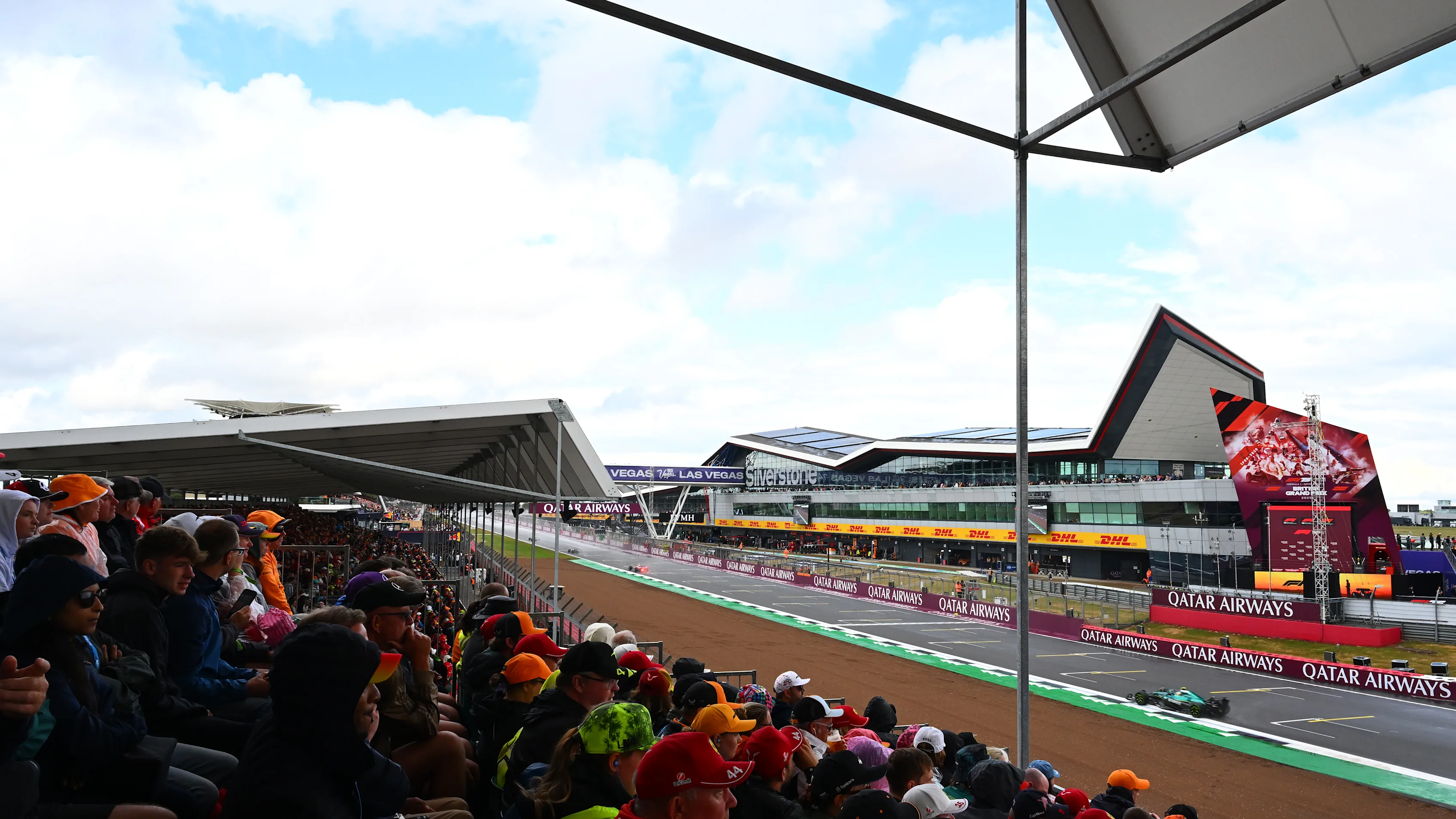
F1 is back in action this weekend with the British Grand Prix. But how much do you know about Silverstone? F1.com has your all-in-one guide…
Key Silverstone statistics
- Circuit length: 5.891km
- Number of turns: 18
- Number of laps: 52
- Race distance: 306.198km
- Lap record: 1m 27.097s - Max Verstappen (2020)
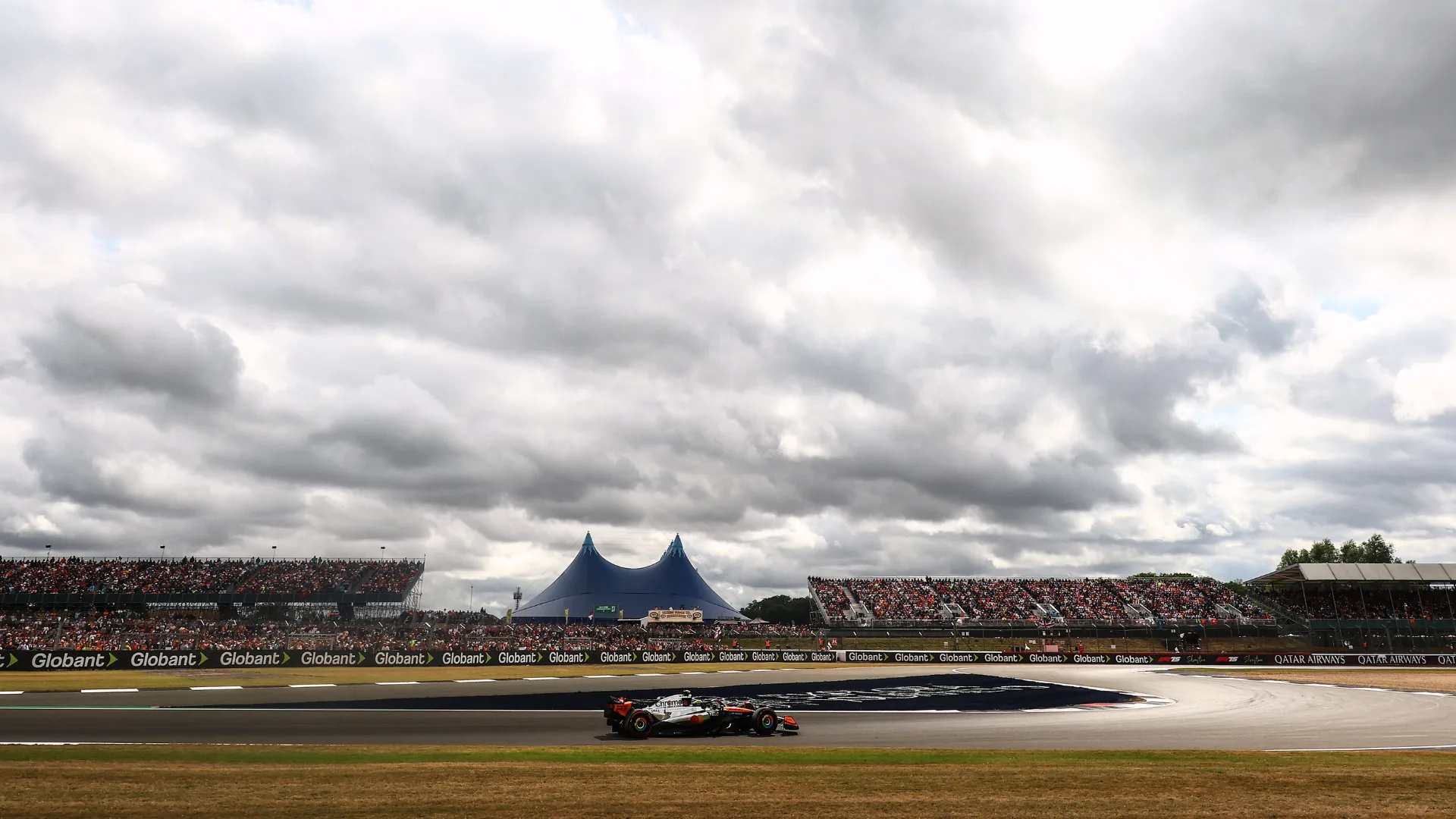
When was Great Britain’s first Grand Prix?
Silverstone was the first ever Formula 1 Grand Prix, hosting the inaugural World Championship round on May 13 1950. Giuseppe Farina, who’d take that year’s title, won the race in his Alfa Romeo 158.
Since then the circuit has held all but 17 of the British Grand Prix races and remains one of the fastest, most exciting and challenging events in the world racing calendar.
Silverstone has always maintained its essential character as one of the fastest tracks in F1, while historic corners like Maggotts, Becketts and Abbey provide some of the biggest challenges for racing drivers anywhere in the world.
What’s the circuit like to drive?
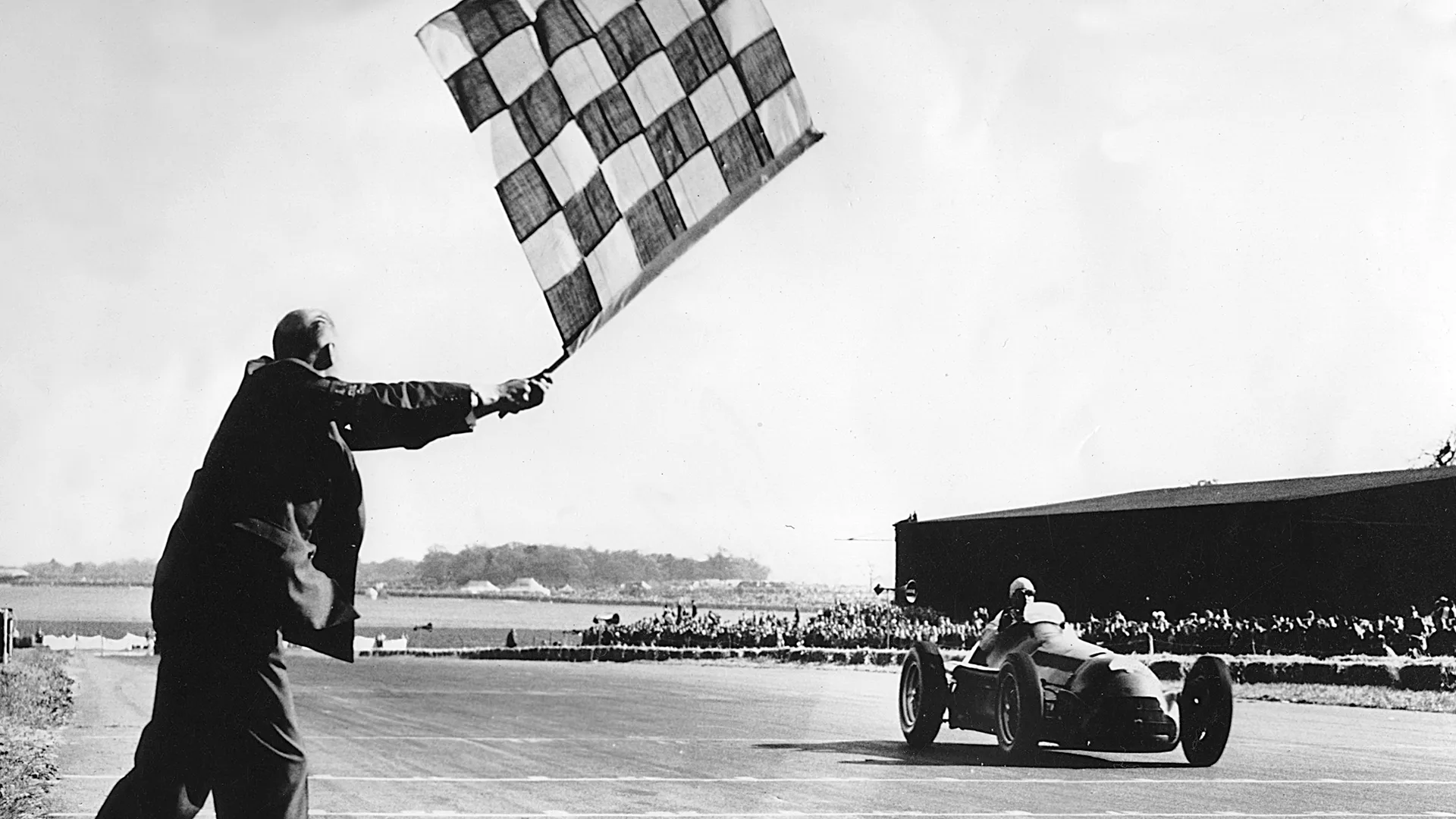
At the 2018 British Grand Prix, Lewis Hamilton compared a flat-out lap around Silverstone to flying a fighter jet, which should tell you all you need to know about the Northamptonshire circuit.
Despite numerous layout changes over the years, Silverstone has always maintained its essential character as one of the fastest tracks on the F1 calendar, while historic corners like Maggotts, Becketts and Abbey provide some of the biggest challenges for racing drivers anywhere in the world.
Jolyon Palmer, former Renault F1 driver, says: “Silverstone is another drivers’ favourite with fast, flowing sequences and some of the best corners in the world. Copse, Maggots and Becketts are where you feel g-force on your body that is pretty rare in Formula 1".
"Copse is a big challenge even though there’s run-off – you go so quick that if anything goes wrong there, you’ll be lucky if you get off lightly. And then the change of direction through Maggots and Becketts is a lot of fun.
"Slowing it down through the final part of that is the key to make sure you get the exit onto the Hangar Straight as well – it’s about finding a rhythm through those sweeping parts. All of this puts a lot of strain on the front-left tyre and we’ve seen some issues here in the past.
"Abbey is the one that is flat-out, but if you’re tucked in behind someone in race conditions it can be on the edge. Overtaking is also very possible with the new loop that’s not very new anymore – Turn 3 if you fancy a lunge, Turn 6 as well.
"Maybe the hardest corner on the circuit is Brooklands, a big braking zone where it’s easy to just trail a bit of brake into the apex and snatch a wheel there. It’s so good as an overtaking area but also an easy area to make a little mistake."
Silverstone is another drivers’ favourite with fast, flowing sequences and some of the best corners in the world.
Where are the Straight Mode zones and overtake detection?
As a reminder, and as explained in our pre-season summary of regulation changes, Straight Mode is a different aerodynamic configuration that allows cars to reduce their drag, making them more efficient when accelerating up towards top speed.
The rear wing continues to open up a gap – just like it did when drivers used DRS (the Drag Reduction System) in the past – but now the front wing also moves. The uppermost front wing elements drop down at the same time the rear wing’s top element does.
This is a mode that is used on every single lap in dry conditions, in every area that is designated for it. Essentially, the car will adapt between two different configurations depending on where it is on the track, providing maximum downforce in corners but then less drag on straights.
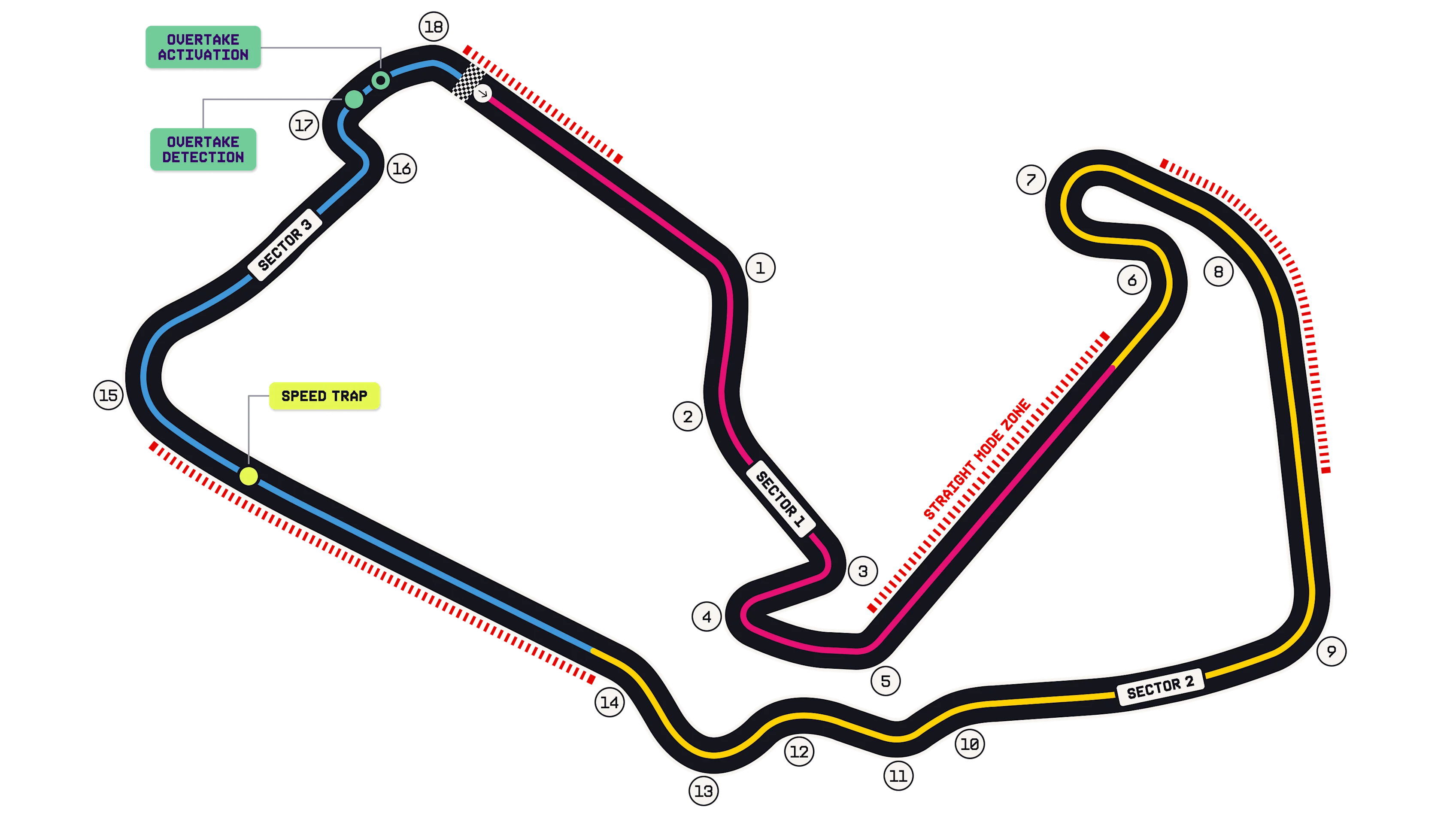
In Silverstone, there are four designated Straight Mode zones, beginning with a run along the start/finish straight, then between Turns 5 and 6, between Turns 7 and 9, and finally between Turns 14 and 15 on the Hangar Straight.
Meanwhile, Overtake Mode replaces DRS and is a new power mode that allows a driver to recharge more electrical energy, and generate an additional electrical power profile, so they can sustain a higher speed for a longer period.
There is one detection point per lap for this mode – expected to be out of the final corner on many occasions, leading onto a long straight – and it will be available to drivers on the following lap as long as they stay within a second of the car in front at that detection point.
Around Silverstone, the Overtake Detection line comes just after the exit to Turn 17, while the Overtake Activation line is just before the entry to Turn 18, leading onto the start/finish straight.
Five fun facts about the British Grand Prix
- The British Grand Prix at Silverstone is the oldest fixture in the Formula 1 World Championship, having been the first race of the first season on May 13, 1950
- The first layout mostly used the runways of what was previously a Royal Air Force base
- Among existing layouts, only Monza and Jeddah have faster lap records than the 243.494 kph average clocked by Max Verstappen during the 2020 British Grand Prix.
- Lando Norris was the last Brit to win his home race in 2025. Lewis Hamilton has won nine times at Silverstone, more wins in a home race than any other driver in history
- Mercedes, Aston Martin, Red Bull, Haas, Alpine and Cadillac all have bases within an hour of the Silverstone circuit
Next Up
Related Articles
 What tyres will the teams have for the Bahrain Grand Prix?
 UnlockedRalf Schumacher on his brother and ‘idol’ Michael
 Why a return to Sepang is a 'golden ticket' for F1 drivers
 BettingOur early Bet Builder picks for the Bahrain Grand Prix
 UnlockedTREMAYNE: Why I hope Ocon’s F1 story isn’t over yet
 Aston Martin keep Alonso and Stroll for 2027