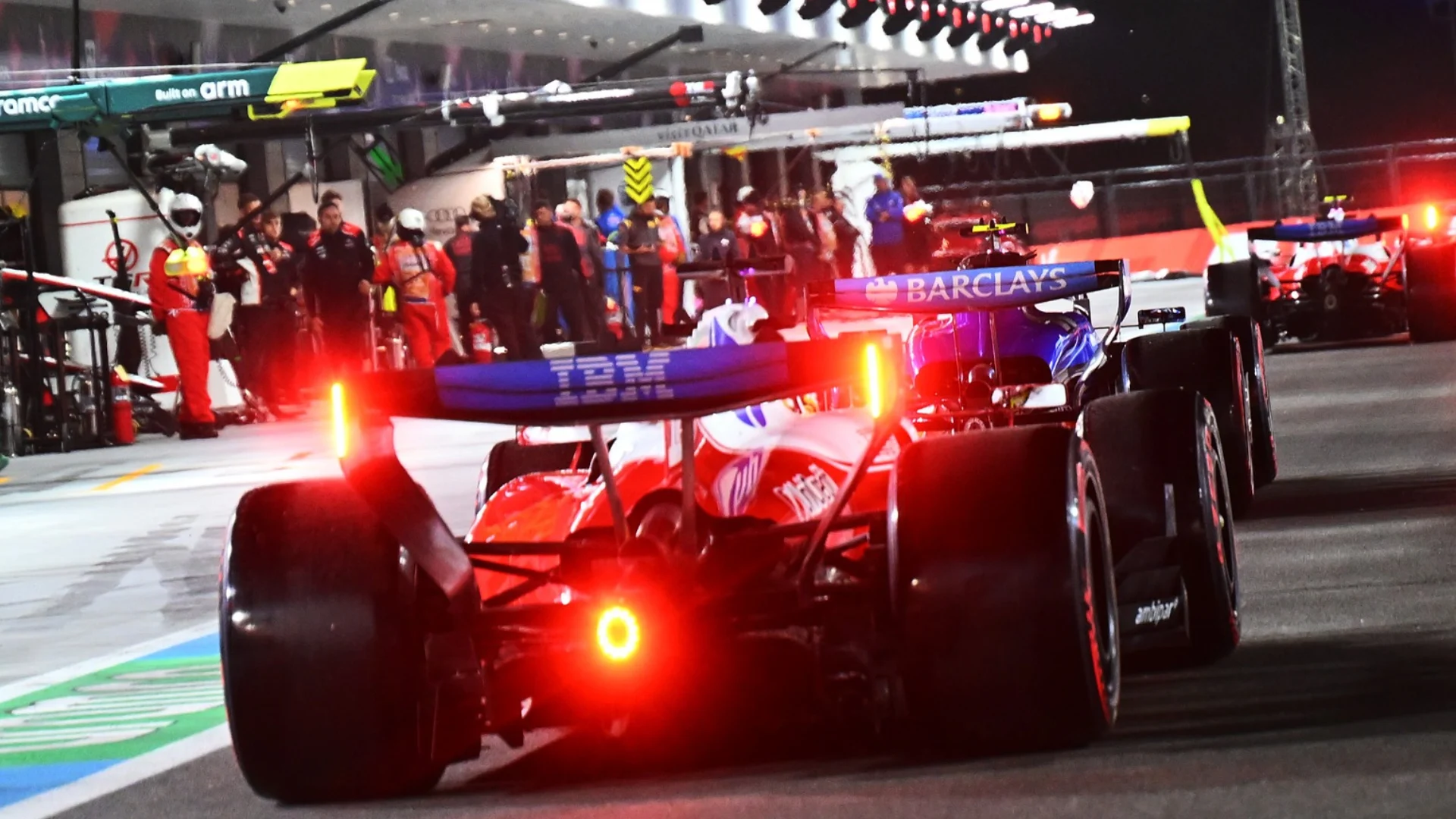
The penultimate race weekend of the 2026 season comes from Qatar, and much like last year, Pirelli have mandated a lap limit on each tyre set at the Lusail International Circuit, due to the unique demands of the track.
Qatar first joined the calendar in 2021, before returning as a regular fixture from 2023. The race is normally run in hot conditions, with high track temperatures affecting tyre wear. Both the 2023 and 2025 editions of the race saw Pirelli impose lap limit counts on each set of tyres, and the same precaution is in place for 2026.
But the lap count itself is higher for 2026, due to the new generation of cars creating different demands on the tyres.
“The decision was taken jointly with the FIA and Formula 1 and was discussed with the teams in advance,” a statement from Pirelli read.
“Each tyre set allocated to the teams at the start of the race week may complete a maximum of 27 laps at the Lusail International Circuit. The measure will inevitably require at least two pit stops for every driver during the race, given that the Qatar Grand Prix is run over a distance of 57 laps.”
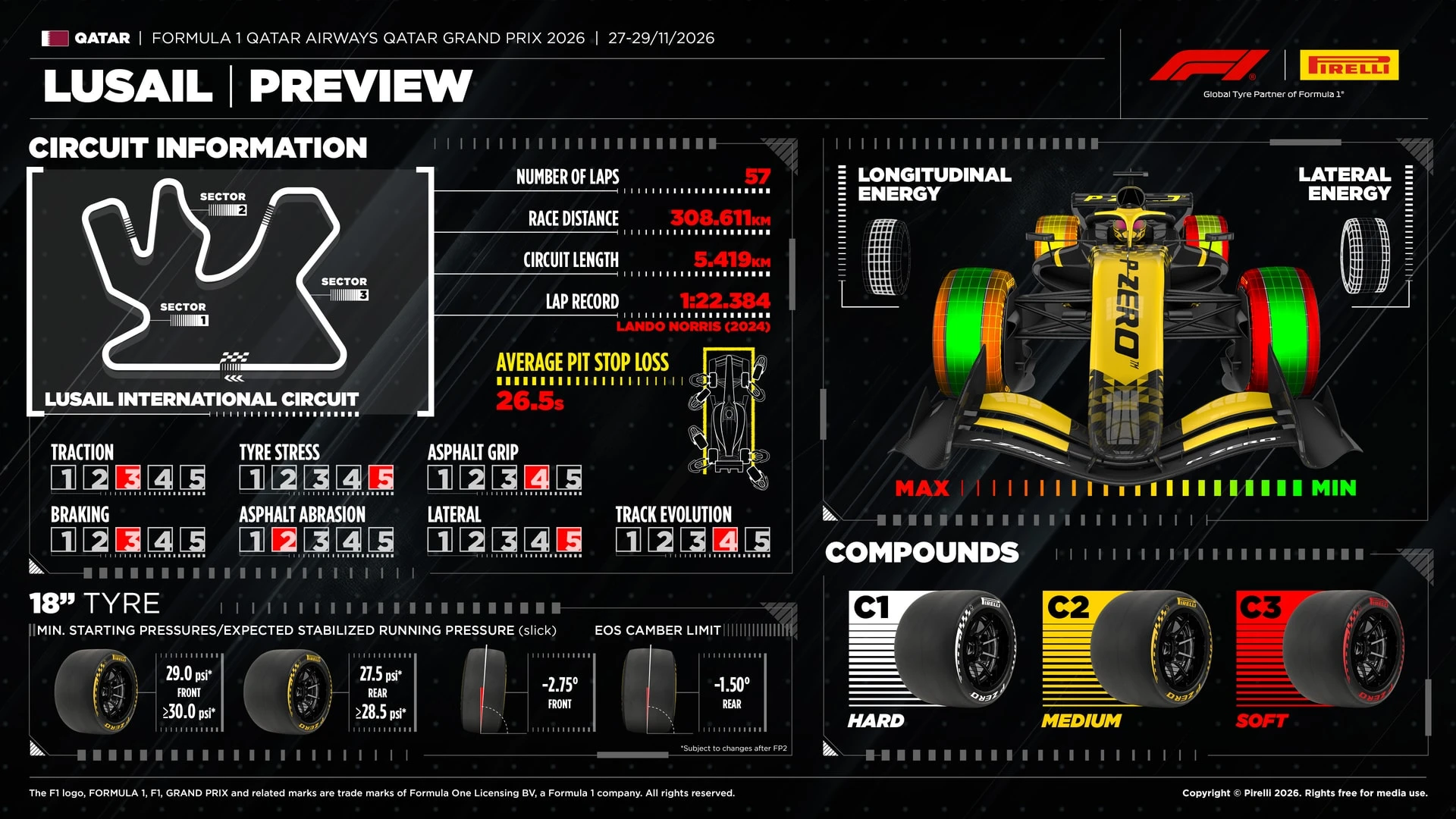
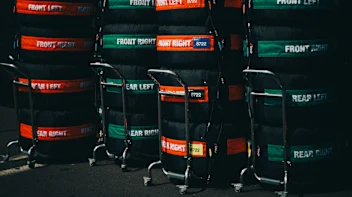
Last season, Qatar hosted a Sprint weekend, meaning the teams only had 12 sets of tyres to play with instead of the usual 13. This year, Pirelli will give each driver 13 sets of tyres: two sets of the C1 hard tyre, four sets of the C2 medium and seven sets of the C3 soft. The hardest tyre compounds have been chosen, again due to the nature of this track.
“Laps will be counted cumulatively across all track sessions, including any laps completed under the Safety Car or Virtual Safety Car. As far as the Grand Prix is concerned, all laps completed from the start signal to the chequered flag will count towards the total.
"Reconnaissance laps, formation laps and any laps completed after the end of the race will not be included,” the Pirelli statement said.
“In all other track sessions, any lap that has been started but not completed will nevertheless be counted as a full lap. Should a team assemble a tyre set using tyres that have covered different mileages, the tyre with the highest lap count will determine the mileage attributed to that set.
“The maximum number of laps permitted per set is slightly higher than last year, when the limit was fixed at 25 laps. The increase has been made possible by the lower load levels recorded so far on the current generation of cars and by a further reinforcement of the tyre construction.”
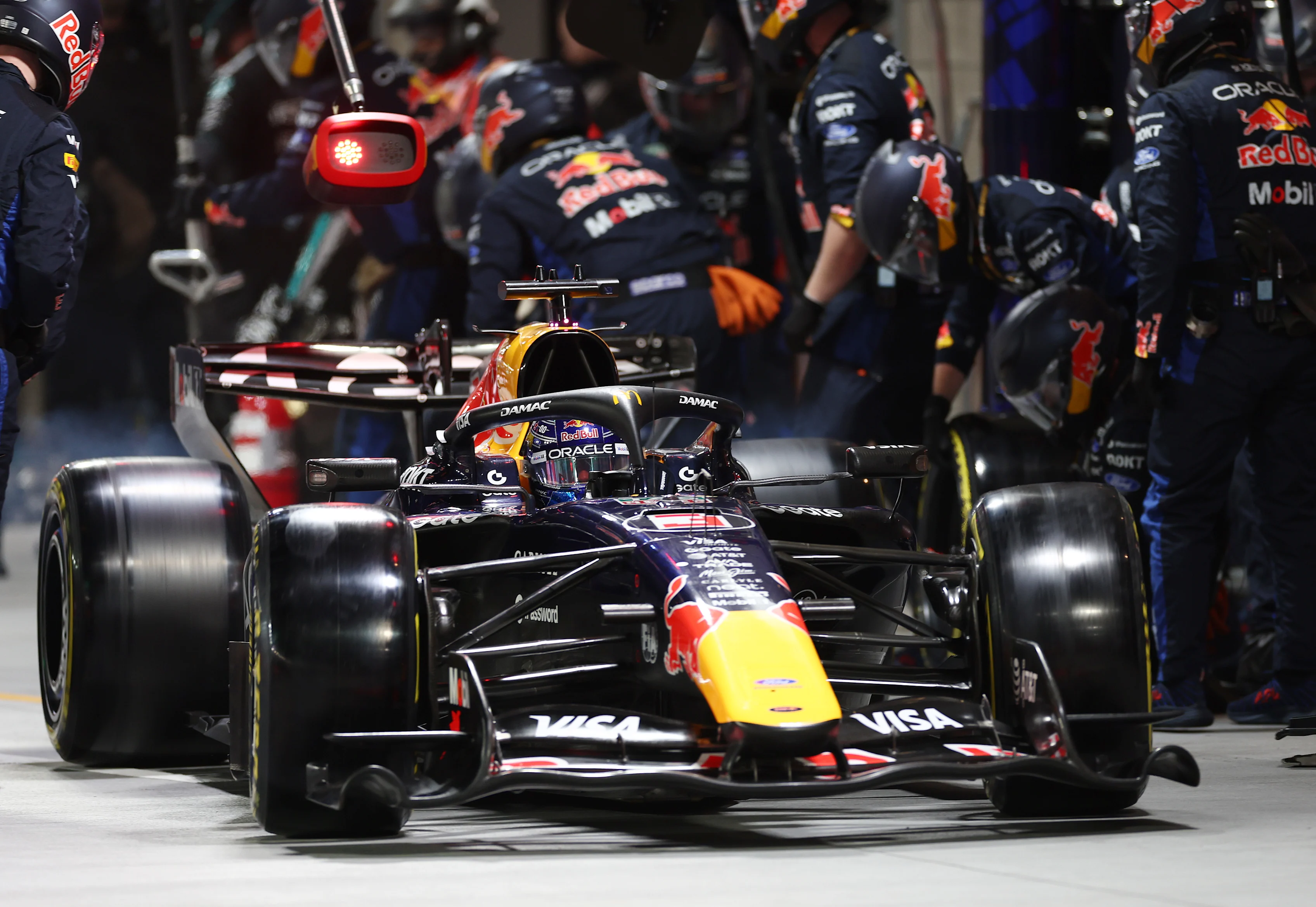
Pirelli noted that their decision to impose a lap limit on each set of tyres was a “precautionary measure.”
“[It] is linked to the unique characteristics of the Lusail circuit, which is particularly demanding in terms of energy loads, thermal stress and tread wear. As already announced, the three hardest compounds in the range will be used in Qatar: the C1 as hard, the C2 as medium and the C3 as soft.”
The C1, C2 and C3 allocation has been used twice this season - at Suzuka and again at Silverstone.
Last season in Qatar, Oscar Piastri won the Sprint from pole, but finished second in the Grand Prix, also from pole. Max Verstappen won the race on the Sunday for Red Bull, which set up a championship showdown in Abu Dhabi between Verstappen, Piastri and eventual champion Lando Norris.
While the mandatory two-stop strategy takes out some variables, there will still be plenty of intrigue this weekend, with the top four teams looking more and more evenly matched as the season heads towards its conclusion in Abu Dhabi.
Next Up
Related Articles
 Perez and Camara react to Las Vegas GP clash
 What tyres will the teams have for the Qatar Grand Prix?
 Wolff explains how Mercedes challenge fell apart in Vegas
 BettingQatar Grand Prix betting guide and latest odds
 Verstappen 'from a different planet' – Mekies
 UnlockedThe RB22 tweaks that helped Verstappen take victory in Las Vegas