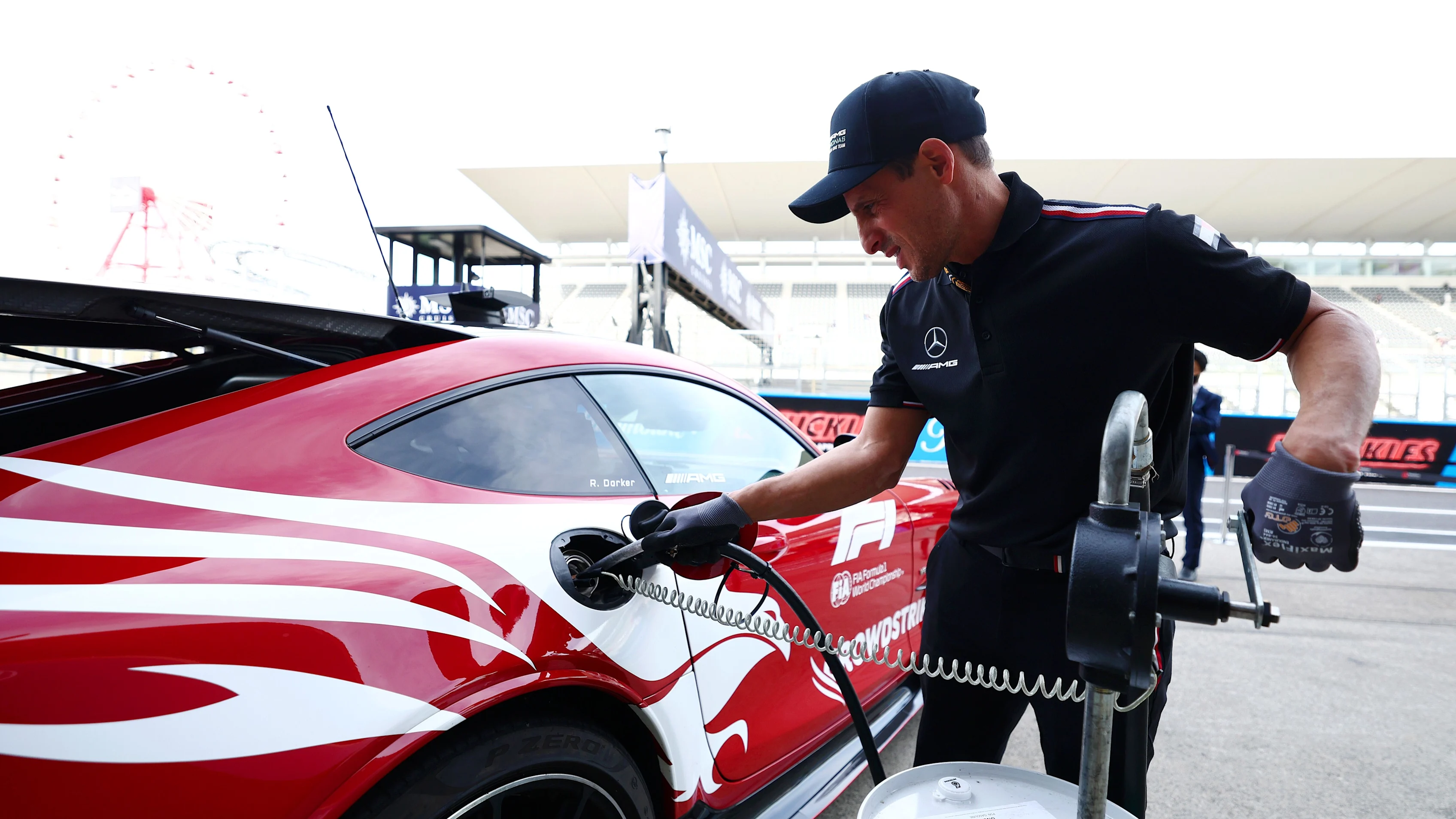
From this weekend’s Miami Grand Prix, the Official FIA Safety Car and Medical Car of Formula 1 will be powered by sustainable fuel, as the sport continues the journey to advanced sustainable fuels being used by F1 cars from 2026.
The safety and medical cars, provided by Mercedes-AMG and Aston Martin Lagonda, will use a 40% sustainable fuel at every Grand Prix for the rest of the 2024 season, as sustainable fuel continues to be a key part of the ESG efforts which have put Formula 1 on track to reach its Net Zero by 2030 target.
READ MORE: How sustainable fuels can benefit the world – and are more than just the future of F1
The use of sustainable fuel in the safety and medical cars is the latest use of the innovation throughout the sport. The current F1 hybrid power units already use E10 fuel containing 10% renewable ethanol, and Formula 1 utilises alternative energy solutions, such as HVO fuel, to power its events and logistics. Formula 2 and Formula 3 have been using a 55% advanced sustainable fuel since the start of the 2023 season, and from 2026 all F1 cars will use advanced sustainable fuels as part of the next generation of power unit regulations.
While the fuel used on track makes up less than 1% of Formula 1’s carbon footprint, the sport has the platform, expertise, and technology to make a significant impact in the sustainable fuel space and believes it has tangible benefits to the wider automotive industry.
Next Up
Related Articles
 BettingBahrain Grand Prix betting guide and latest odds
/GettyImages-854940022.webp) 5 storylines we're excited about ahead of the Bahrain GP
5 storylines we're excited about ahead of the Bahrain GP All you need to know about the Sepang International Circuit
 Hadjar explains what makes Verstappen such a tough driver
 UnlockedHow Hadjar handled his comeback to claim a podium in Baku
 BettingThe 5 drivers most likely to win the Bahrain GP