How Miami's Hard Rock Stadium will transform after the Grand Prix for the FIFA World Cup
When this weekend’s Miami Grand Prix is complete, preparations immediately begin at the Hard Rock Stadium for the upcoming FIFA World Cup. F1.com has been finding out more about how this transformation will happen in the short space of a few weeks…

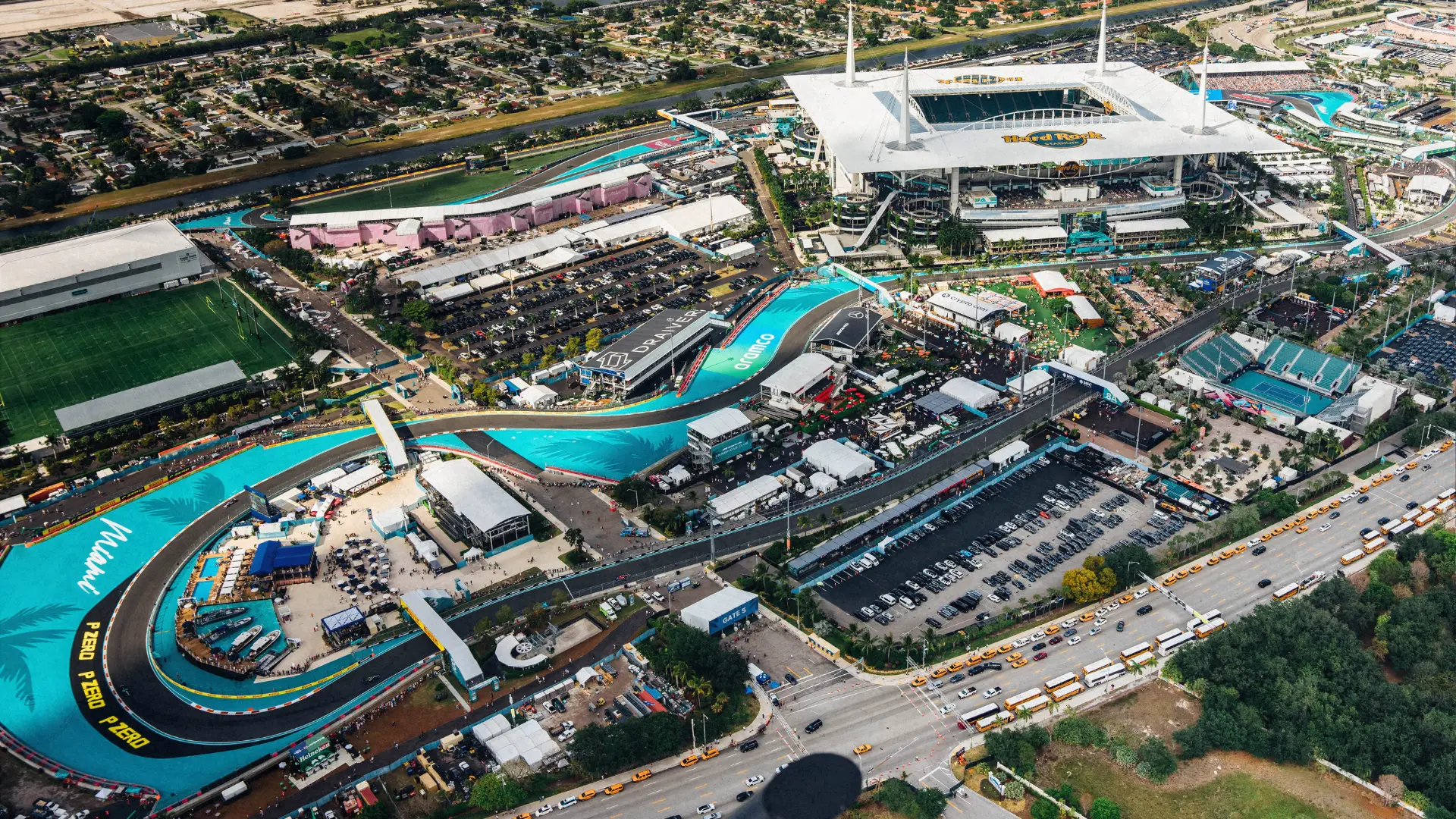
Alongside hosting this weekend’s Miami Grand Prix, the Hard Rock Stadium is the home of multiple sporting events across the calendar year. Originally built as an NFL stadium for the Miami Dolphins in 1987, the venue has since gone on to welcome various sports as well as hosting big-name music concerts.
This year the stadium is adding another global event to the schedule as it prepares to host the FIFA World Cup, which is being held at multiple locations across Canada, Mexico and the United States. Miami’s first match will take place on June 15, around six weeks after F1’s visit.
So what does the transition from Grand Prix to football tournament look like? Todd Boyan, Senior Vice President of Stadium Operations for the Miami Dolphins, has shared an insight into the process, as well as reflecting on the venue’s growth, how certain facilities are adapted for other events, and a particularly unique feature of the Hard Rock Stadium...
Juggling the busy schedule of a ‘global entertainment destination’
The Hard Rock Stadium might have started life as home to the Miami Dolphins – a role that remains a priority today – but its calendar has expanded significantly over the years.
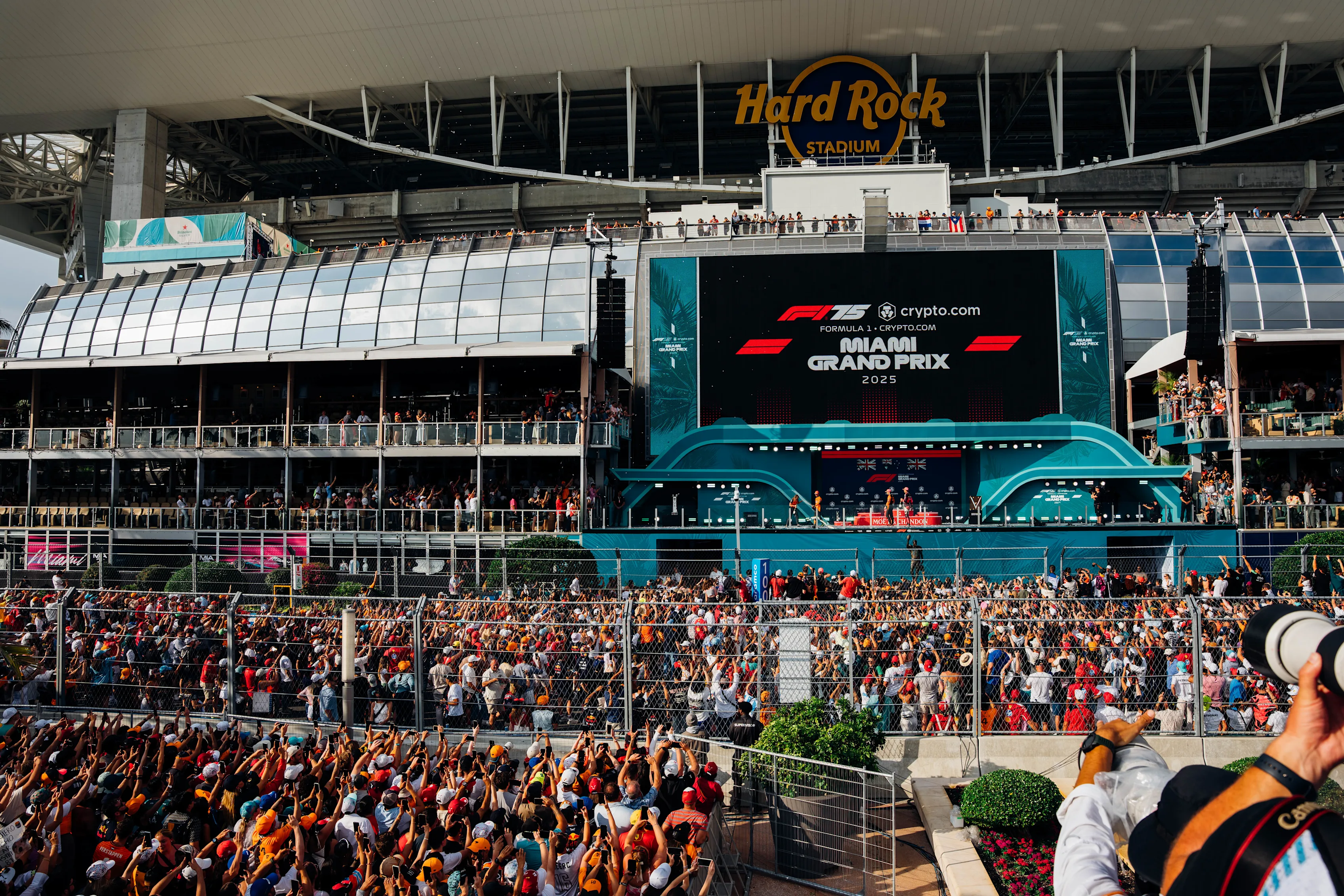
Other ventures that the venue supports include the University of Miami’s college football, the Miami Open tennis tournament, and – since 2022 – the Miami Grand Prix, which is held on the temporary Miami International Autodrome circuit that features the stadium at its epicentre.
It is a transition that Boyan admits has turned the venue into a “global entertainment destination”, adding that the stadium has gone from hosting 25 ticketed events in the year after its complete renovation – which began in 2014 and was completed in 2017 – through to now “approaching 60”.
.webp)
.webp)
“And it's not just the stadium bowl events,” he explains. “It's using the stadium's real estate and the campus to create these wide and diverse types of events that we do, so typically our events calendar is pretty full and trying to work the calendar each year is a complex set of equations.”
Indeed, switching between each event involves a tightly-managed schedule. Reflecting on the busy calendar ahead for 2026, Boyan explains how, after the end of the Miami Dolphins’ season in early January, the stadium immediately started preparations for hosting the College Football Playoff National Championship on January 19.
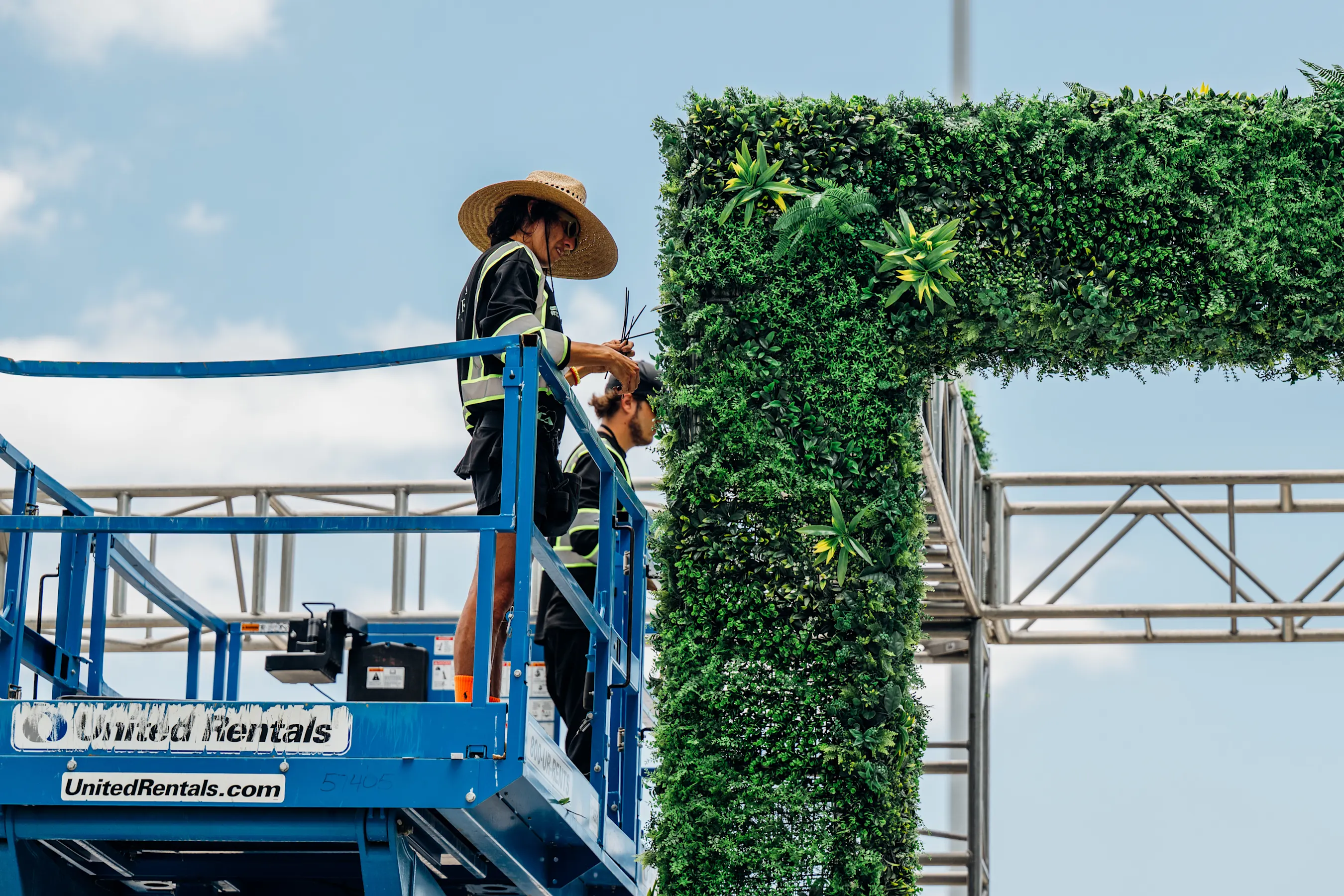
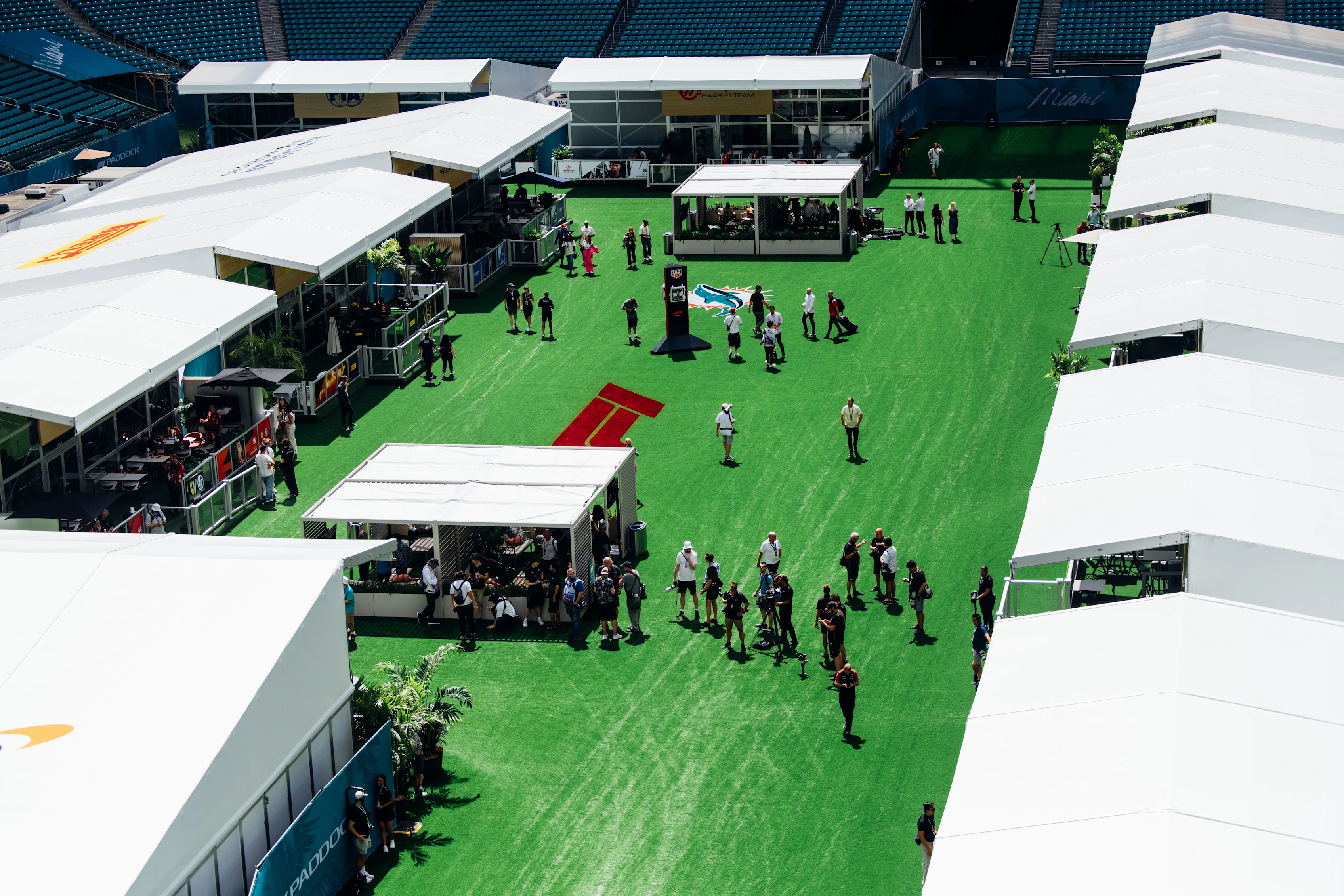
“We were in hours after that game, ripping the pitch out, removing the grass, installing flooring, bringing in cranes to build a stadium court on the stadium's pitch, in addition to starting to build the F1 campus outside the stadium, as well as building the campus for the Miami Open, which is outside the stadium as well,” says Boyan.
Preparing certain facilities for the tennis tournament, such as the 16,222-capacity temporary stadium court, takes around “a couple of months”, a process that is simultaneously taking place alongside work on the Formula 1 infrastructure.
This means that, when the Miami Open begins in March, the focus for the ongoing F1 installation switches to aspects that are further away from the stadium to prevent the tennis players from experiencing background noise.
“When we get through with the tennis, then it becomes a full-on sprint 24 hours a day to get from the Miami Open at the end of March to the race weekend,” says Boyan.
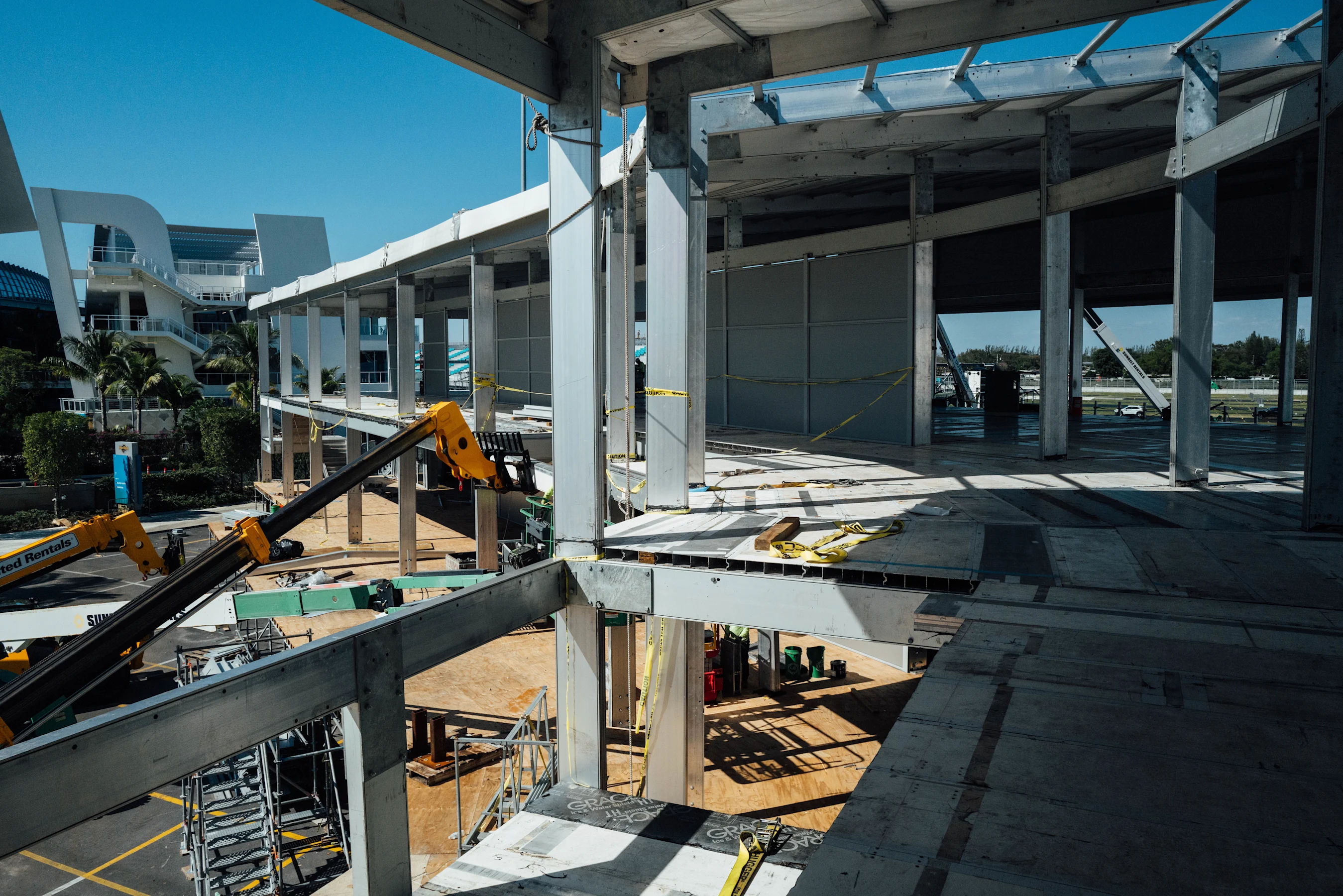
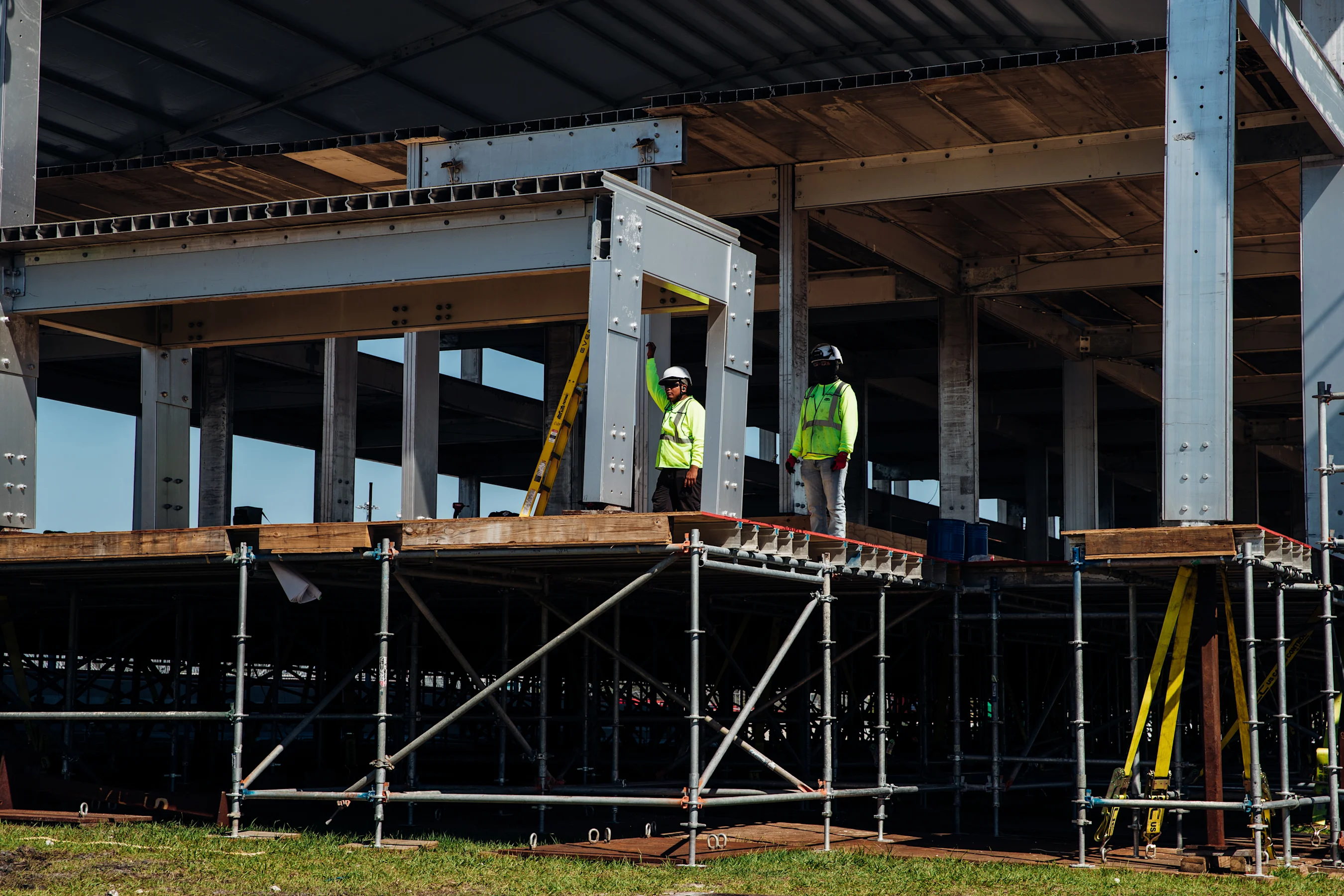
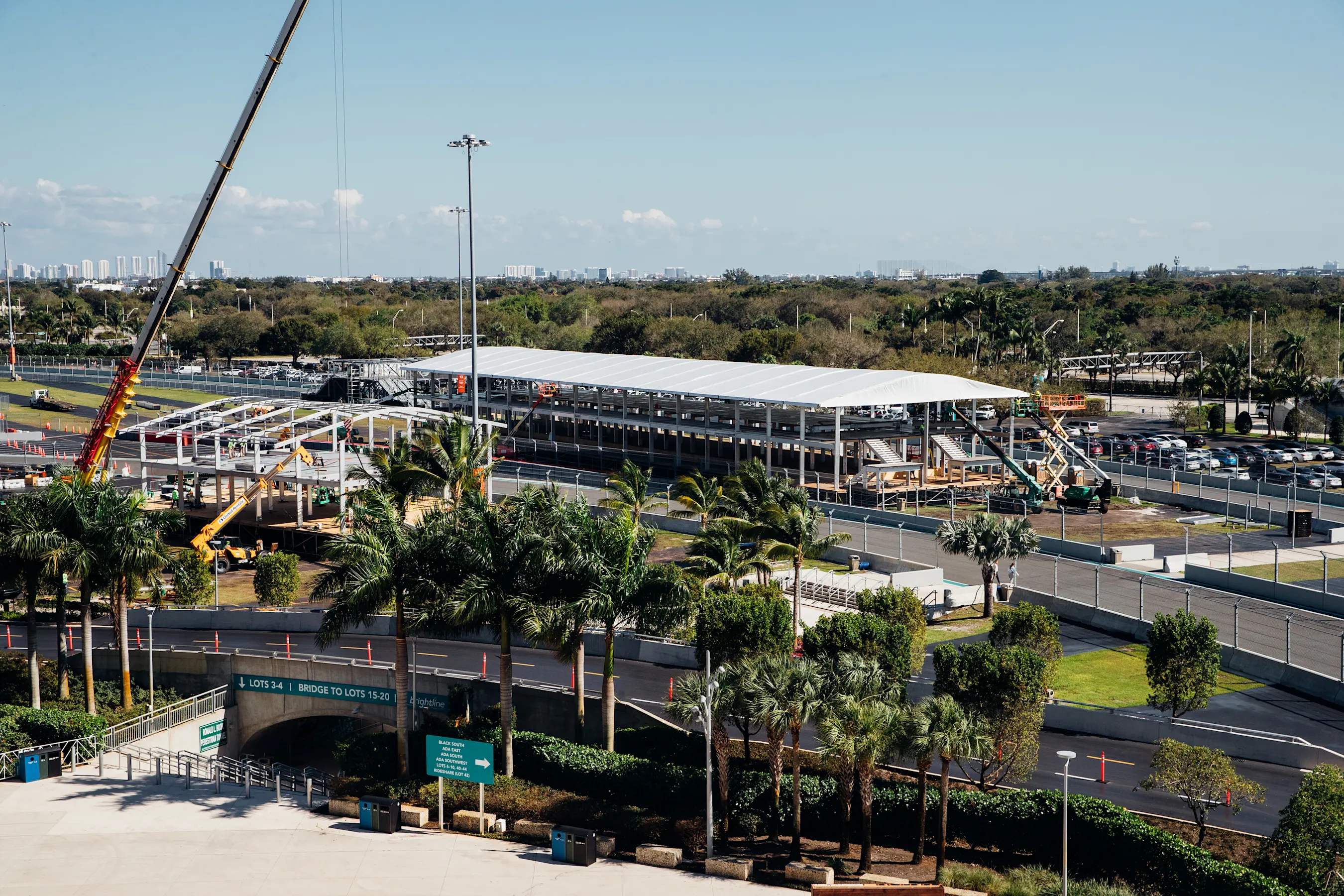
“I think we have about 250 structures between grandstands, hospitality, tents, pedestrian bridges, all sorts of infrastructure [for the F1 campus], so it's really an intense period for us.”
A look at some of the numbers from the creation of the Formula 1 facility underlines this: the venue states that the construction involves more than 10 million pounds of steel, 570,000 square feet of turf, 158,400 feet of plumbing, more than 300 trucks on site daily, 209 tents across the campus and 22 hospitality structures being built.
.webp)
.webp)
.webp)
.webp)
Integrating World Cup planning with F1
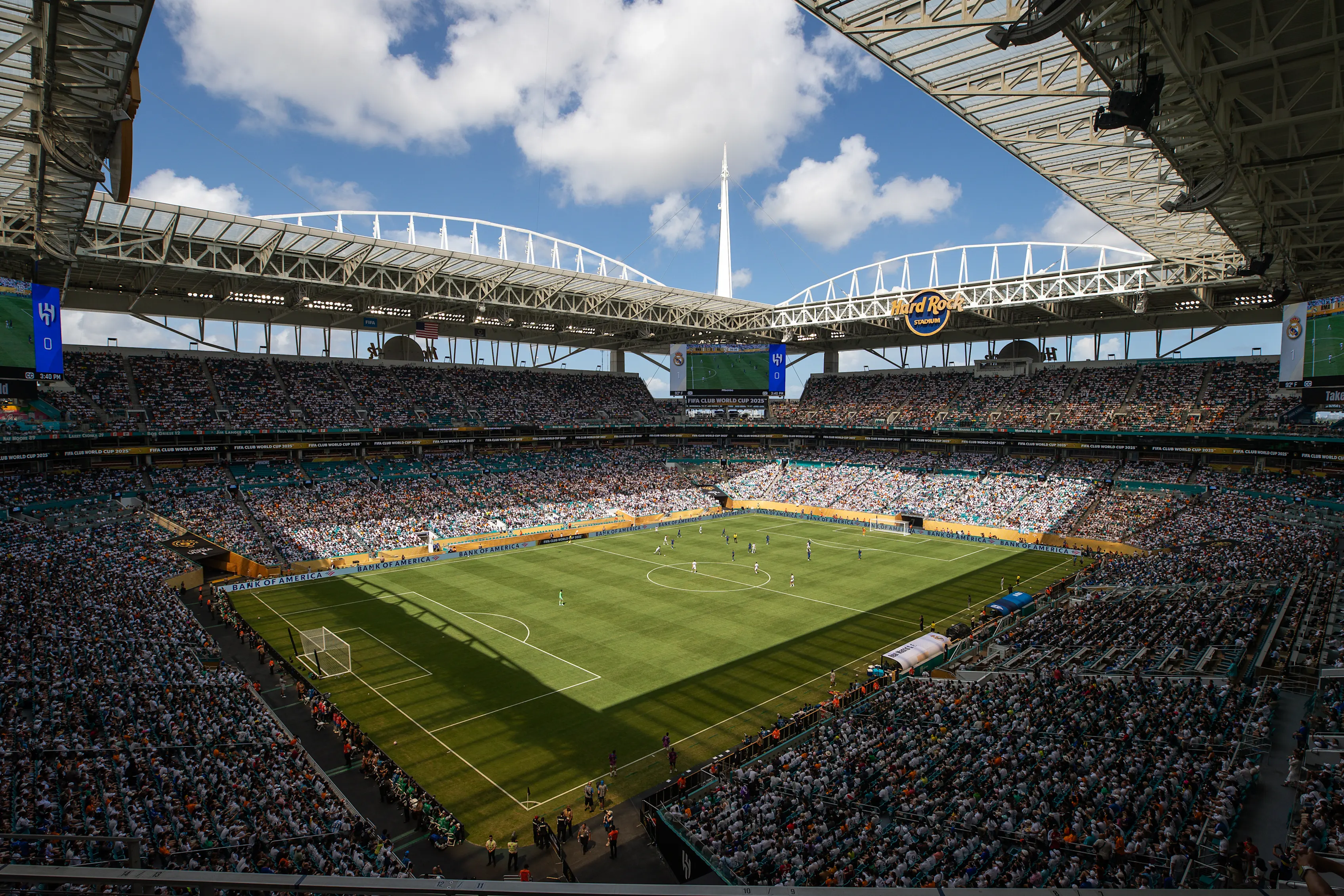
This year, of course, there is a notable addition to the stadium's schedule. Boyan explains that the venue will “transition immediately over to the FIFA World Cup” once the Grand Prix is over, with the Hard Rock Stadium set to host seven matches beginning with the first on June 15.
“So we have a period of a couple of weeks to get the infrastructure off the pitch that we use for F1's paddock, and then the pitch gets brought in and installed mid-May,” Boyan continues. When those World Cup games are completed in July, work will then begin to prepare the venue for the return of NFL and college football.
While some other stadiums holding World Cup matches are able to begin preparations earlier, the fact that the Hard Rock Stadium needs to transition from Formula 1 just a few weeks prior to the first game means that there has been plenty of planning between the venue and FIFA for this time-sensitive process.
“I think traditionally we take about four weeks to dismantle the F1 Miami Grand Prix,” says Boyan. “Much of what you see on the infrastructure that we have is temporary – there are permanent aspects to the track as well as the racing infrastructure, but a lot of that is taken down and over the course of four weeks after the race so by the first week of June that's traditionally done.
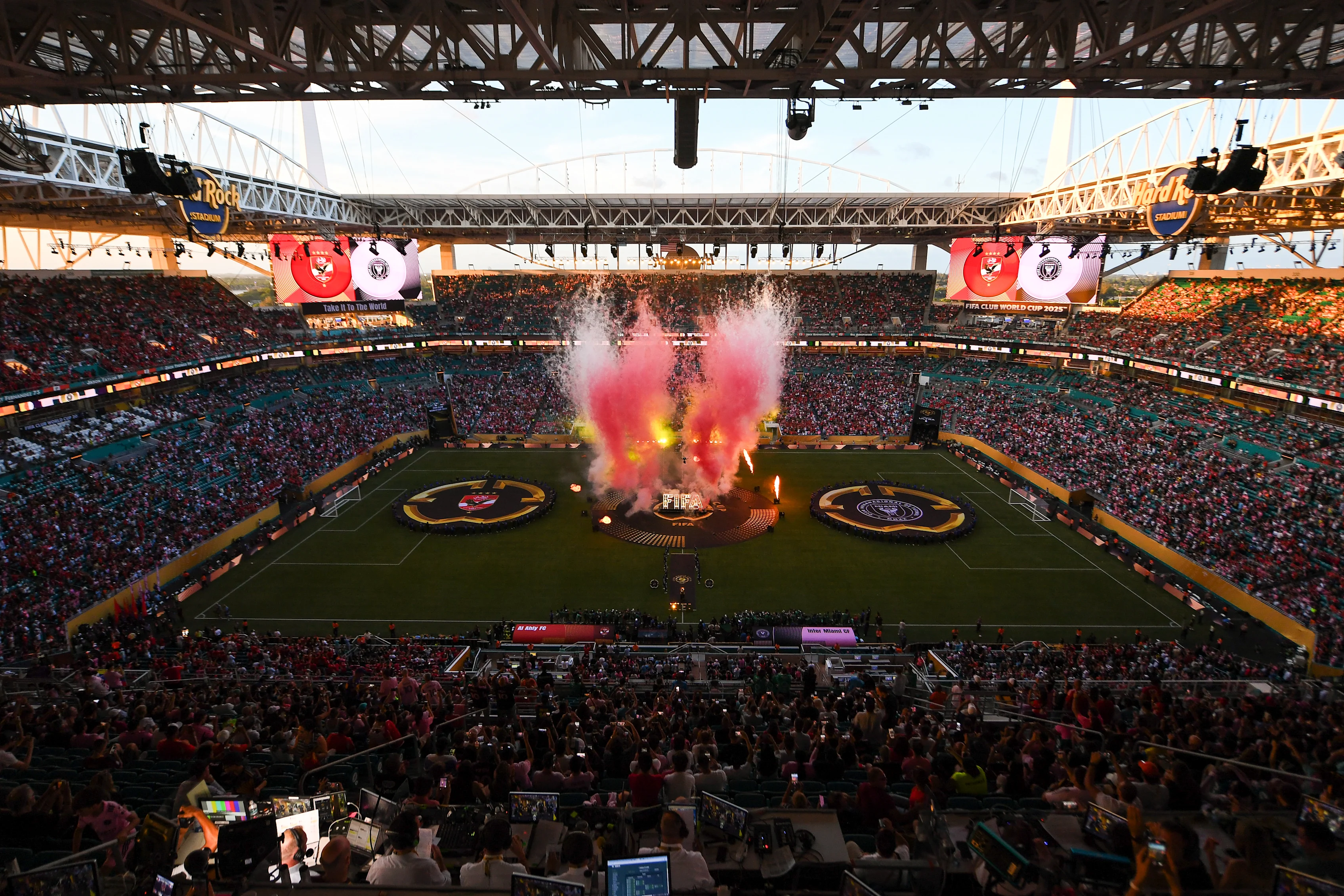
“We are expediting some of those items that we're dismantling so we can fit in what FIFA wants to bring in. They have zones outside the stadium and we're basically expediting certain areas of the deconstruction process to facilitate their arrival, which also includes the broadcast equipment that they're going to be bringing in for World Cup matches.
“We've been meeting for a couple years with FIFA on their plan and how we can integrate. They've been fully aware of the Miami Grand Prix schedule and we're trying to integrate as best we can.
“FIFA recognises they have more time in other stadiums where they can get in earlier than they are able to here, so they've had to adapt a little bit to make sure that they understand that they can get in after the Grand Prix.
“So in the first week of May, they're going to start to see some availability open up for them to be able to come on site and be able to load in. The pitch will be installed in mid-May, and that starts the process for them that gives them a full month prior to the first match on June 15.”
How facilities are repurposed for different events, from F1 to Taylor Swift
Rather than turning the stadium over to FIFA, Boyan describes the process as a “collaborative effort”, one that involves finding “efficiencies” that both parties can work with.
He explains, for example, how a structure used as hospitality at Turn 5 for the Grand Prix will transition into the media centre for the World Cup, while some of the race wall used for the track becomes a secondary perimeter for the football tournament.
More permanent facilities at the track have also proven adaptable across the many different events that the stadium hosts.
“We've been fortunate to have an owner, Stephen Ross, who's been willing to invest in the property and provide us the ability to be thinking long term and being able to invest in infrastructure that benefits more than just one event,” Boyan explains.
“You would think, okay, you build the garages and the paddock club and that certainly is core and essential to the F1 Miami Grand Prix. But we've used the paddock club for many other events.
“It's used at Miami Dolphins games as a hospitality space. We use the garages as hospitality spaces where people can come in and basically be pre-match in the garage areas. But we also use it for other events.
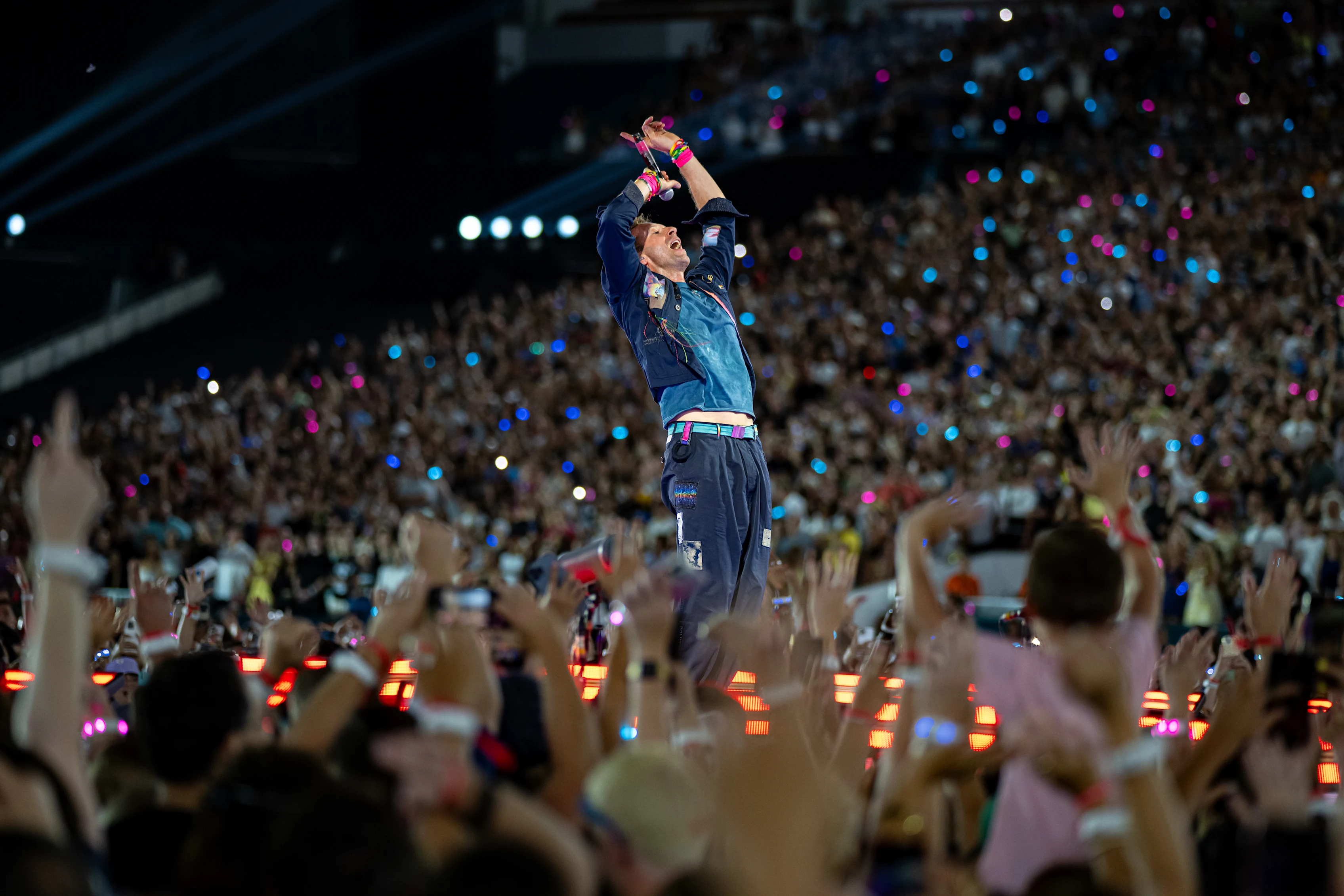
“For example, we had Taylor Swift for three shows two falls ago, and we basically used that paddock building for her retail sales. Her merchandise sales are very big, and that was a large building that we were able to have her merchandise sales use the paddock club and provide comfortable queuing space for patrons going to their shows so that they could go and buy her merch.
“We just had the College Football National Championship, and we use that for extensive hospitality as well. So when we're investing into the property, we're focused on how those things that we're investing can be useful to all events that we do – not just, for example, the Grand Prix.”
Continuing to deliver a ‘new and unique’ experience for F1 fans
This adaptability is a factor that Boyan believes offers more scope for the venue to develop, something that they have continued to do since first hosting the Miami Grand Prix back in 2022.
“For us, we learn every year,” he reflects. “We've evolved in the fact that a large portion of the facility and the property is temporary. It gives us the flexibility to make adjustments from year to year.
“It's not all permanent infrastructure that once you build it, it's done, so we actually feel like the fact that a lot of the infrastructure [is temporary] gives us the ability to be more flexible and more creative.
“I think the Yacht Club is an example of that. That's something that we envisioned in the last couple of years and was brought to life, and the fact that it's something that we're able to do with the large open floor plates that we have, the real estate we have, gives us that flexibility.
“We're fortunate to have a visionary CEO in Tom Garfinkel who is very supportive and looks [at], how do we deliver and continue to deliver on the experience for Grand Prix fans that come, that they see something new and unique every year?
“This year, we've also evolved and looked at all the different neighbourhoods that the stadium and the property has. Those are aligned with the certain districts of Miami and the different neighbourhoods in Miami, and you'll see the food and the culture of each neighbourhood in Miami, whether it's Miami Beach or Key Biscayne or Wynwood.
“Those areas you'll see that have been curated by our wonderful fan events team, that they've taken those neighbourhood concepts that are here in South Florida and delivered them in each neighbourhood around the track.
“I think that's something unique and it gives us something that people can look forward to every year, that they're not going to see the same thing over and over.”
Always looking for ‘new opportunities’
Boyan admits that the Hard Rock Stadium attracted “a lot of interest” from other stadiums when they began hosting the Miami Grand Prix, with venues “realising that there's more entertainment out there than the traditional NFL football or college American football and concerts”.
And the development does not end there, as Boyan explains: “The global entertainment destination is certainly something that we're really not just sitting by and trying to say, ‘Hey, what we've accomplished so far is what we're going to do going forward.’
“We've added Formula E to the calendar – you see that that's something that we're going to continue to do. We're not going to sit and not look for new opportunities. We're always looking for new opportunities.
“It just has to make sense, not only financially, but within the calendar of events that we do have, because we have certainly a packed calendar every year.”
While other venues may also expand to host other events, there remains one particular feature that is unique to the Hard Rock Stadium, with the Miami Dolphins’ home purporting to be the only professional sports franchise in the United States that owns and operates their own sod farm – a facility in the Florida town of Loxahatchee Groves, spanning 96 acres and capable of growing 20 separate fields at a single time.
“Each year we probably resod – depending upon the event schedule – eight to 10 times a year,” says Boyan.
“That grass is professionally grown and has the spec that the NFL requires, but FIFA has also required. When that grass goes down, it'll take us within one day that grass is removed, and then there's about a three-day process to install it.
“Then FIFA is going to come in behind that and do pitch stitching that they're doing for all World Cup venues.
“The pitch has been highly regarded. We've done probably more than 50 football matches here in this stadium over the years, and the pitch is something that we've received very positive feedback from the teams that have played there.
“But it'll be a three-day installation process after F1 is done, the concert flooring will be removed, and then we'll basically install that pitch and then they'll come in and do the stitching after that.”
This all points to a very busy schedule for the Hard Rock Stadium team when the race weekend comes to a close, but first we have plenty of on-track action to look forward to. With an extended FP1 and the return of the Sprint, the Miami Grand Prix looks set to kick off the resumption of the 2026 season in style.
Next Up
Related Articles
 All you need to know about the Sepang International Circuit
 Verstappen names the one thing he wants before 2026 is out
 Facts, stats and trivia ahead of the 2026 Bahrain GP
/GettyImages-2297999485.webp) Alonso explains decision to stay with Aston Martin for 2027
Alonso explains decision to stay with Aston Martin for 2027 Why there’s still hope for Russell in the 2026 title race
 UnlockedAll the stories that got the Malaysia paddock talking