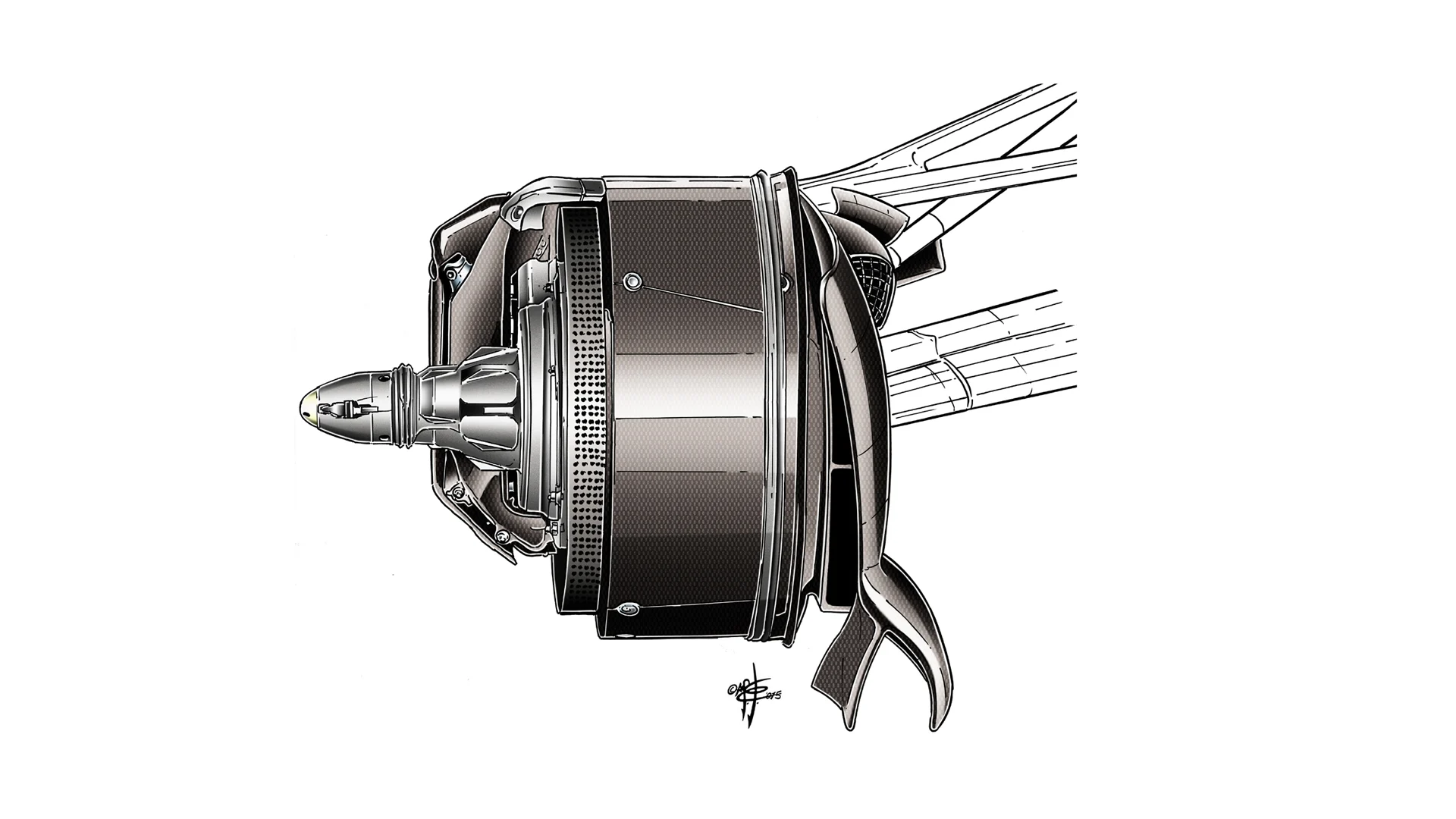
The thin air in Mexico City - the result of its high-altitude location at more than 2,200m above sea level - has given the teams an unprecedented challenge this weekend, notably in terms of keeping their cars’ key components cool and within their working temperature ranges.
Brake cooling has been heavily affected by altitude. Mercedes opted for the open front brake drum design above, as used previously in Canada on the F1 W06 Hybrid. At the rear, Nico Rosberg’s brakes caught alight due to overheating in Friday practice, forcing the team to open up the extremely closed rear drum configuration they had been running.
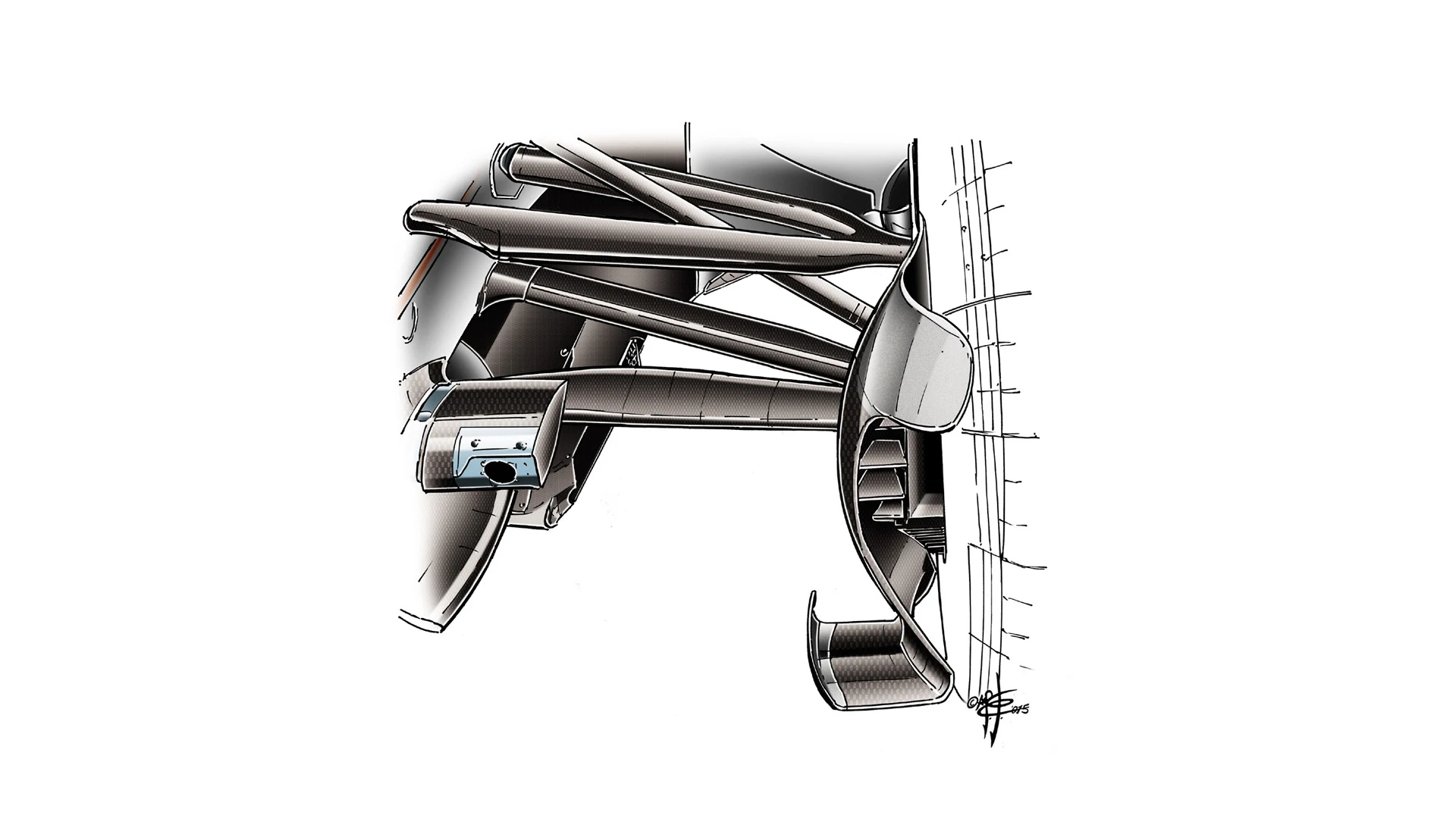
The drawing above, meanwhile, shows the very open duct design McLaren have adopted for the front of the MP4-30 at the Autodromo Hermanos Rodriguez. Note the multiple inner fins designed to best direct airflow and optimize cooling.
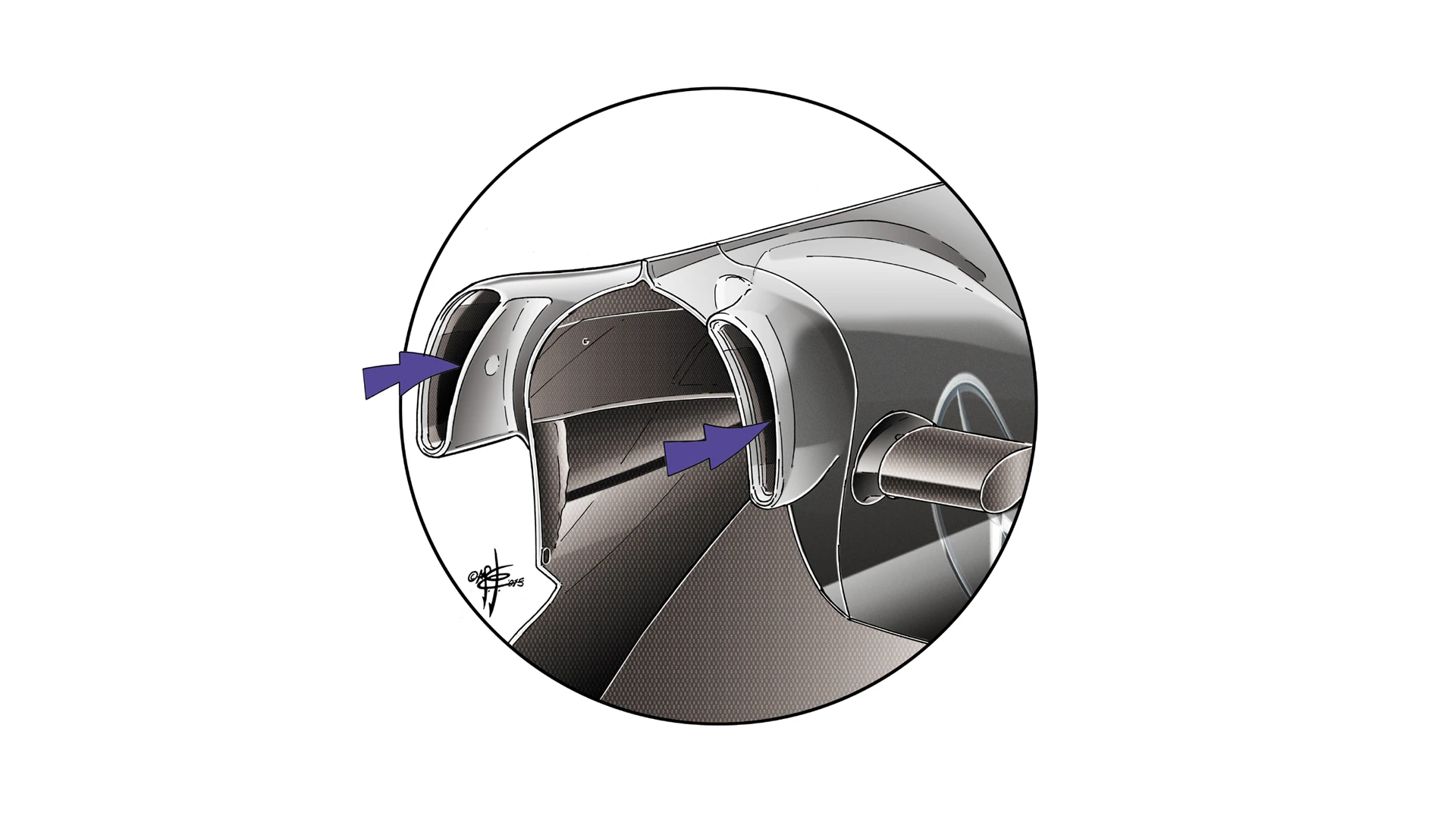
With turbos needing to work harder to produce normal power outputs in Mexico, engine and ERS cooling has also been at a premium. Both Mercedes ran their engine covers with the extra airbox ‘ears’ seen above - as debuted at the last round in Austin - boosting airflow to the MGU-H, which needs to run at higher revs than normal here.
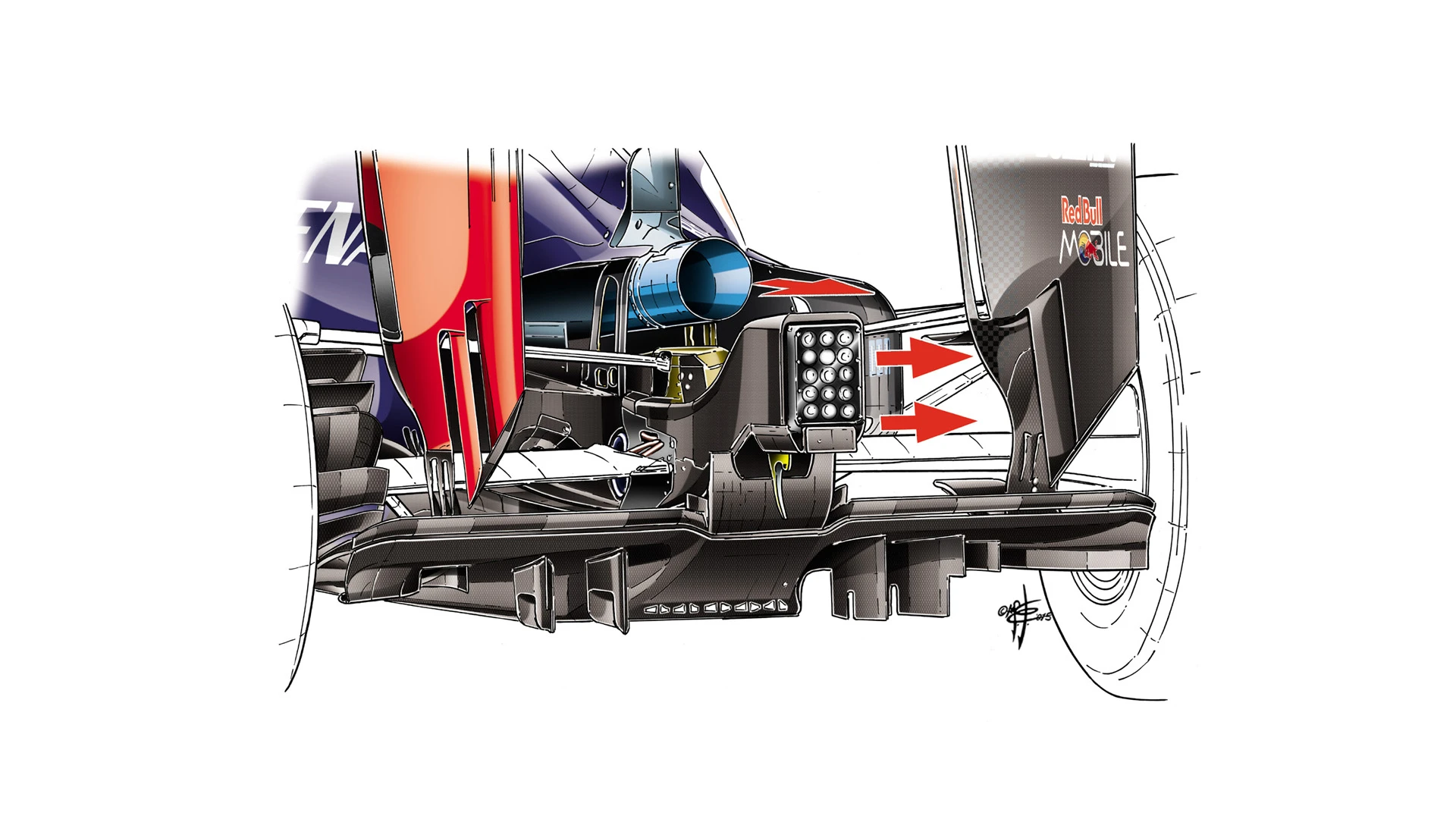
At Red Bull, with the cooling requirements even more severe than in Malaysia, the team completely opened up the rear of the RB11, in a similar way to sister team Toro Rosso did on their SRT10 at Sepang. In the drawing above, also note the small, triangular vortex generators on the central base of the rear diffuser, first introduced by Red Bull last year to increase the diffuser’s efficiency.
Next Up
Related Articles
 Perez given penalty after Azerbaijan Qualifying infringement
 BettingAzerbaijan GP Bet Builder after Russell claims pole
 Leclerc torn over P2 as Hamilton a 'sitting duck' in Baku
 Audi's upgrade package 'delivering as expected' – Binotto
 UnlockedWhat are the tyre strategy options for the Azerbaijan Grand Prix?
 Verstappen beats Russell and Hamilton in Azerbaijan FP3