EXPLAINED: What is F1’s ‘ADUO’ engine upgrade system – and how will it work?
F1.com runs through a new development mechanism available to power unit manufacturers from the 2026 season.
To encourage close competition, F1’s Technical Regulations for 2026 and beyond will allow manufacturers to make updates to their homologated power units – in specific situations – under a new development mechanism. But what is the so-called ‘ADUO’, and how does it work? F1.com presents an all-in-one explainer…
What does ‘ADUO’ mean?
First up, ‘ADUO’ stands for ‘Additional Development and Upgrade Opportunities’.
During specific periods of each F1 season from 2026 to 2030, covering the sport’s latest power unit cycle, governing body the FIA will monitor each manufacturer’s Internal Combustion Engine (ICE) performance, in turn creating an ‘ICE Performance Index’.
Various factors are considered, spanning engine speed, input shaft torque and MGU-K (Motor Generator Unit - Kinetic) power, as well as a weighting for power sensitivity on lap time across measured laps.
As the ADUO assessment focuses on the ICE alone, the FIA admits it is not representative of full power unit performance, given that the ERS (Energy Recovery System) also plays a crucial role in the overall power output.
When does ADUO come into play?
In short, when a power unit manufacturer’s ICE is 2% or more behind the best-performing engine in the Performance Index, ADUO is granted.
As set out in Article 4.3 of Appendix C5 of the 2026 F1 Technical Regulations, if a manufacturer’s power unit is at least 2% but less than 4% down on the leading ICE, they will be eligible for one additional homologation upgrade in the current season, and an additional upgrade in the following season.
Power unit manufacturers whose Performance Index is at least 4% below the leading ICE will be eligible for two additional upgrades in the current season, and two more during the following season.
When are the monitoring periods?
Under Article 4.2 of Appendix C5 of the 2026 F1 Technical Regulations, there are three periods during the 2026 season when power unit manufacturers’ ICE performance will be monitored.
These three periods were initially listed as Rounds 1-6, 7-12 and 13-18.
However, given that the first period – including the Australian, Chinese, Japanese, Bahrain, Saudi Arabian and Miami Grands Prix – was affected by the Sakhir and Jeddah events not taking place, adjustments followed.
The first period is now formed of the campaign’s opening five rounds (Australia, China, Japan, Miami and Canada), with results to be communicated no later than two weeks after the Canadian Grand Prix.
The second period will cover Rounds 6-11 (from Monaco to Hungary), while the third period will cover Rounds 12-18 (from the Netherlands to Mexico City).
Once results have been communicated, power unit manufacturers eligible for ADUO will receive notifications detailing their allowance, and will be able to implement any upgrades as early as the following race.
What upgrades can be made?
Once ADUO comes into play, developments can be applied to a range of power unit components.
As per the FIA’s list, permitted upgrades include elements of the ICE, engine exhaust system, Turbocharger and waste gate/pop-off, ICE- or exhaust-mounted electrical components and sensors, ERS (and associated cooling systems), the MGU-K, and the car’s Control Electronics, along with hydraulic functions, fluids and ballast.
ADUO upgrades are not cumulative within a season, and will only be granted on the first occasion a manufacturer is deemed as eligible to make developments.
Meanwhile, any upgrade not used in a specified season will be forfeited. So, if a manufacturer is granted one upgrade for 2026 and one upgrade for 2027, the 2026 upgrade must be introduced before the end of that season, or it will be forfeited, while the upgrade for 2027 remains valid.
What about F1’s cost cap?
Since 2021, teams’ annual spends have been controlled under the F1 cost cap.
As such, questions have arisen over how the ADUO will work under such restrictions – but FIA Single Seater Director Nikolas Tombazis moved to allay concerns.
“It’s important to make clear that ADUO is not a kind of balance of performance mechanism,” he commented. “A team or manufacturer will not suddenly get greater fuel flow rate or more or less ballast.
“It is, in fact, a cost cap relief mechanism, where a PU manufacturer meeting ADUO criteria during a review period is given an opportunity to develop its engine through a downward adjustment.
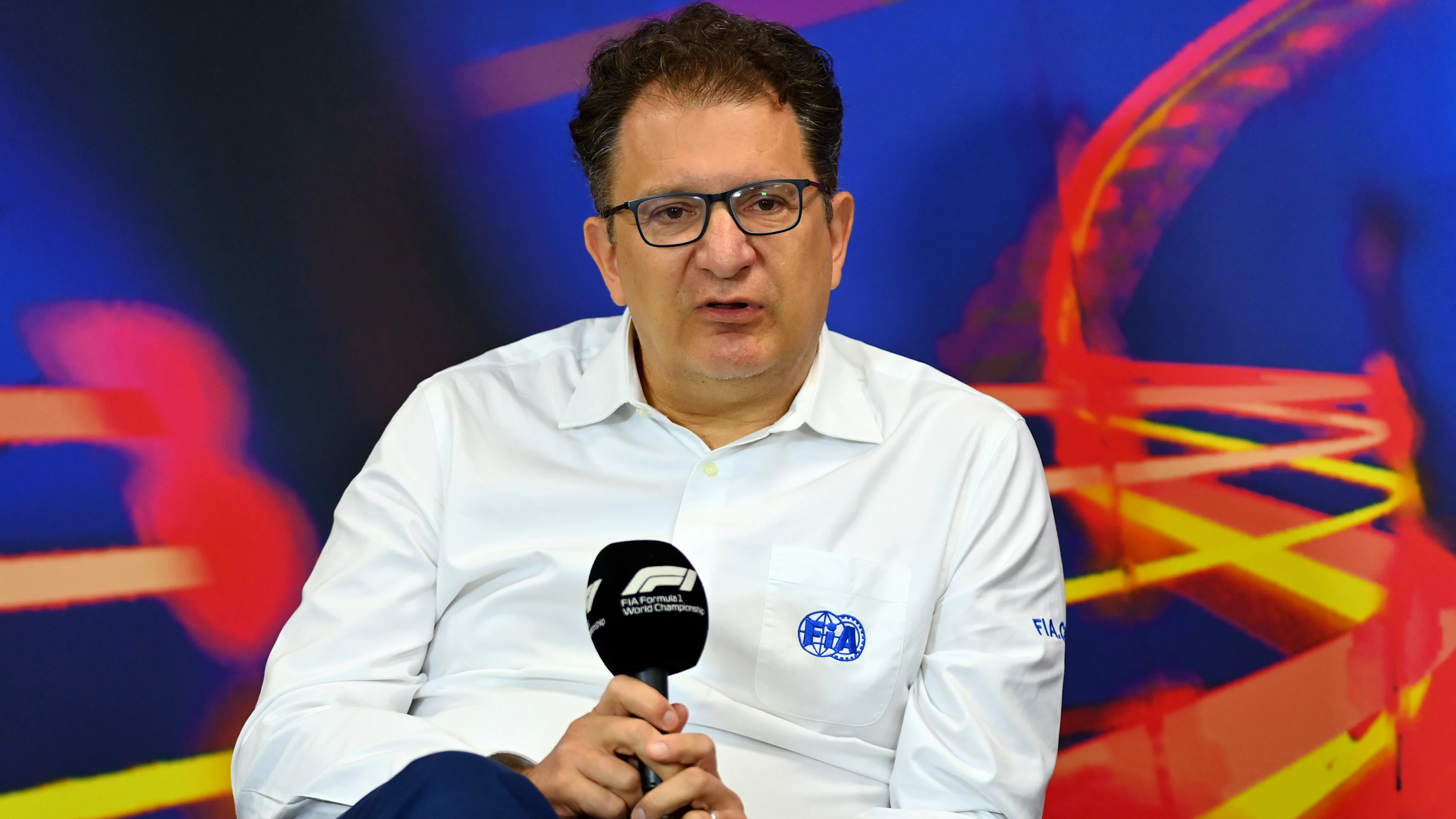
“That’s not to underestimate it, but a manufacturer will still need to make the best engine in order to win. It’s not a magic bullet, or like the FIA is handing out brownie points to somebody who’s behind. It simply provides them with leeway to develop their power unit within the framework laid out by the Technical Regulations.”
Article E4.1.1.t of the 2026 Formula 1 Regulations sets out the positive impacts of the ADUO on power unit manufacturers’ expenditure.
Every manufacturer sitting 2-4% behind will get allowances up to USD $3.0 million; from 4-6% behind they will get up to USD $4.65m; from 6-8% they will get up to USD $6.35m; and from 8%-10% they will get up to USD $8m.
Manufacturers with a deficit of 10% or more will get an allowance for each ADUO period of up to USD $11m and, in 2026 only, further support might be offered.

Next Up
Related Articles
 Wolff wary of Red Bull's growing threat to Mercedes
 Norris 'not happy with a P4' finish in Singapore GP
 Leclerc ‘gave it all’ to secure P2 in Singapore
 Hadjar 'happy' with Singapore GP recovery drive from pits
 Hamilton apologises after ‘painful lesson’ in Singapore
 Inside Rwanda’s plan for the African Grand Prix